
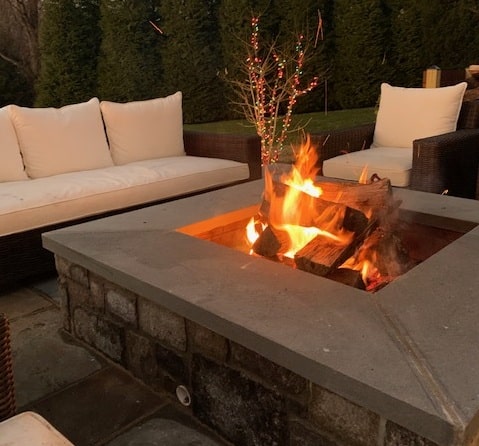
If you’re lucky enough to have an outdoor fire feature, you’re doing something right. But caring for your outdoor fire feature isn’t just about looks—it’s about keeping those flames safe, reliable, and downright inviting. Because when the day cools off, it should be the crackle and glow drawing people in, not worry.
Why Caring For Your Outdoor Fire Feature Matters
Let’s face it: a fire feature is way more than a decorative element—it’s where memories happen. A well-maintained fire feature becomes the backbone of gatherings—from roasting marshmallows with kids to late-night conversations under the stars. But ignore it, and bits of rust, grime, or loose components can turn that cozy centerpiece into a headache.
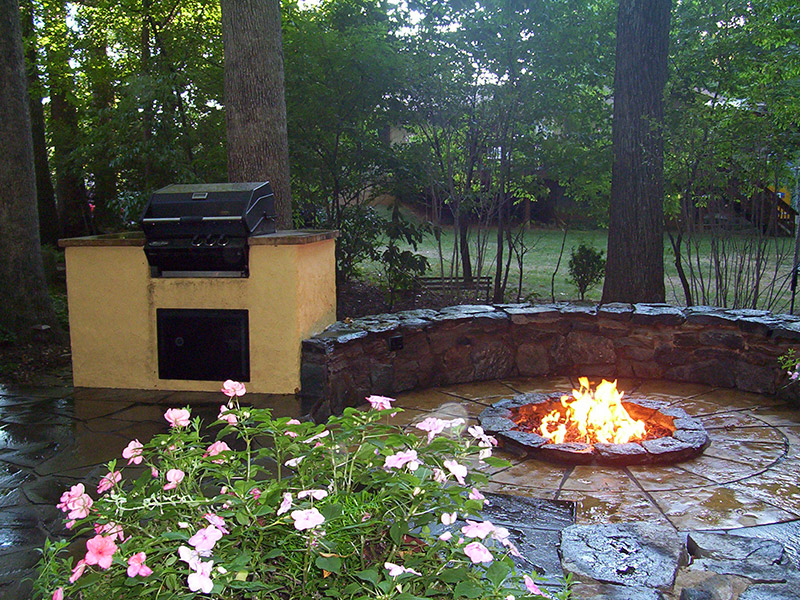 Regular Cleaning & Debris-Free Zone
It’s simple: clean your fire feature. Sweep out ashes, shake off debris, and give surfaces a quick wipe-down—cooling down first, of course. If it’s built-instone or metal, a mild soap-water mix or citrus cleaner does wonders. A clean fire feature burns better and keeps smoke low. Plus, it just looks better.
Inspect, Repair, Repeat
Once a month (or before big fire nights), take a walk around your fire feature. Look for cracks, loose screws, or worn seals. Fix small stuff before it turns ugly—and expensive. A tiny crack that’s ignored can eventually widen, and suddenly you need more than a little patch-up. Prevention is way cheaper (and less stressful) than repair.
Cover Up—Your Fire Feature Deserves It
When not in use, cover that fire feature. Rain, leaves, even bird droppings—none of that should get friendly with your wood or burners. A sturdy, weather-resistant cover not only protects your setup, it keeps your prep time down when you’re ready to light up again.
Safe Operation Every Time
Keep things safe by following the manual (yes, that thing you stuffed in a drawer). Keep flammable objects—and curious kids or pets—at least three feet away. If it’s gas-powered, shut off valves when not in use. No shortcuts. No risky lighting tactics. Safety isn’t optional.
Seasonal Care for Longevity
-
Winter: Make sure everything’s dry before covering. Cold and moisture are sneaky combo to bust up stone or metal.
-
Summer: Watch for cracks caused by heat; seal stone as needed to avoid weather wear.
-
In both seasons, give propane lines or gas fittings a quick check for leaks or corrosion.
Bring It All Together
Caring for your outdoor fire feature is totally worth a few extra minutes each month—because it means more nights spent laughing around the fire, less time worrying about upkeep. Keep it clean, keep it safe, cover it when needed, and inspect often.
FAQs
1. How often should I clean my outdoor fire feature?
Aim for a light cleaning after every couple of uses. A deep-clean once a month keeps it running smooth and looking sharp.
2. Can I leave ashes in it over winter?
Not a good idea. Ashes trap moisture and mess with materials over time. Always brush them out once the fire has fully cooled.
3. What kind of cover is best for my fire feature?
A heavy-duty, weather-resistant vinyl or canvas cover that fits snugly—but allows airflow—is your best bet. Bonus if it’s UV resistant.
Caring For Your Outdoor Fire Feature isn’t just maintenance—it’s protecting the moments those flames help make. Keep it glowing, keep it safe, and let’s make your outdoor space a place people never want to leave.
Related Posts:
Natural Gas Fire Pits vs Wood Fire Pits
Fire Pit Ideas For Memorable Nights
Allentuck Landscaping Company is Your Residential Landscape Company
Phone: 301-515-1900
At Allentuck Landscaping Company, our mission is to create beautiful environments for people to enjoy. We see landscaping as a way to improve people’s lives.
The Allentuck Landscaping Company team has been delighting homeowners in Maryland, Washington DC and Northern Virginia for over 28 years with our turnkey approach to landscape design, installation, construction and maintenance. Most companies try to serve many types of customers at the same time; homeowners, shopping centers, office buildings and the list goes on. At Allentuck Landscaping Company, we focus on one customer, you, the homeowner. We have a singular focus on bringing you the best landscape practices, the best customer service, and the best value for your home.
Services Provide – Master Landscape Plans, Complete Maintenance Programs, Plantings, Patios, Walkways, Retaining Walls, Water Features, Outdoor Lighting, Outdoor Kitchens, Trellises & Pergolas, Irrigation Systems, Drainage Solutions, Grading & Sodding. Fire Pits & Fire Places, Spring Clean Ups, Decks, Fences
Areas Served – Chevy Chase, Bethesda, Potomac, Rockville, North Potomac, Darnestown, Gaithersburg, Germantown, Travilah, Damascus, Boyds, Clarksburg, Ijamsville, Urbana, Frederick and Washington DC.
Allentuck Landscaping Co. is a proud member of the National Association of Landscape Professionals and MyLandscapeAcademy.
13711 Travilah Rd, Rockville, MD 20850
(301) 515-1900