

Could A French Drain Solve Your Yard Drainage Problems?
Managing water flow in your yard is crucial to maintaining a healthy landscape and protecting your home from potential damage. One of the most effective solutions for controlling water is a French drain. At Allentuck Landscaping Co., located in Rockville, Maryland, we have extensive experience in designing and installing French drains that help homeowners solve their drainage issues. In this blog, we’ll explore what a French drain is, how it works, and why you might need one for your property.
What Is a French Drain?
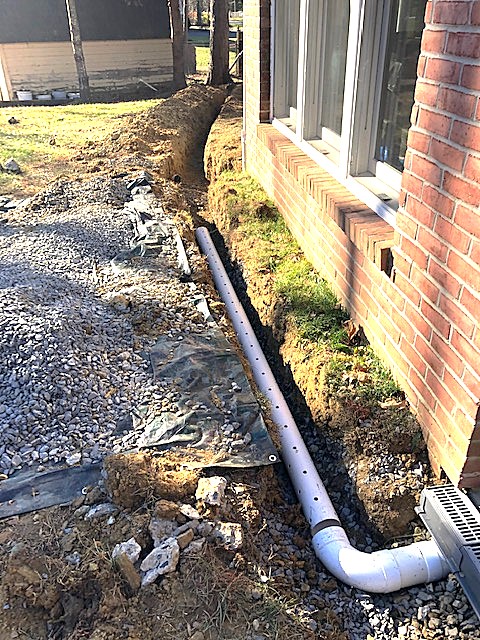
Components of a French Drain
A French drain is composed of a few key elements, each playing an important role in its effectiveness:
- Trench: A shallow, sloped trench is dug to guide water flow away from the problem area.
- Perforated Pipe: A perforated pipe is laid within the trench to collect and transport water. The holes in the pipe allow water to enter and be carried away.
- Solid Pipe: In many cases, a solid pipe is connected to the end of the perforated pipe to carry the water to another location of the property where it exits the drainage system.
- Gravel: Gravel is placed around the pipe to facilitate water movement while filtering out debris that could clog the pipe.
- Filter Fabric: A layer of filter fabric is often placed between the gravel and soil to prevent dirt and roots from clogging the system.
These components work together to ensure water is efficiently redirected away from areas where it can cause problems.
Common Uses of French Drains
French drains are versatile and can be used in various scenarios around your property. Here are some common uses:
- Preventing Basement Flooding: By directing water away from your home’s foundation, a French drain can help prevent basement flooding.
- Reducing Soil Erosion: In areas where water runoff causes soil erosion, a French drain can help control and reduce this issue.
- Managing Water in Low Spots: If your yard has low spots that collect water after rain, a French drain can be an effective solution to keep those areas dry.
Benefits of Installing a French Drain
Installing a French drain offers several significant benefits:
- Prevents Water Damage: By diverting water away from your home’s foundation and other vulnerable areas, a French drain helps prevent costly water damage.
- Improves Yard Usability: Draining excess water from your yard makes the space more usable, especially in areas prone to becoming muddy or waterlogged.
- Protects Home Foundations: A well-functioning French drain reduces the risk of water seeping into your foundation, which can lead to cracks and structural issues.
- Long-Term Cost Savings: Investing in a French drain can save you money in the long run by avoiding water-related repairs and maintenance.
How to Know If You Need a French Drain
Wondering if a French drain is right for your property? Here are some signs that you might benefit from one:
Standing Water: If you notice standing water in your yard after rain, especially in the same spots, it may be time for a French drain.
Soggy Yards: Professional installation often results in a more durable and effective drainage solution, saving you potential headaches down the road
Water or Moisture in the Basement: If water is seeping into your basement or you have issues with dampness, a French drain might be the solution you need.
If you’re experiencing any of these issues, it’s a good idea to have a professional assess your drainage needs.
DIY vs. Professional Installation
When it comes to installing a French drain, you might wonder whether it’s a project you can tackle yourself or if you should hire a professional. Here’s a comparison to help you decide:
Installing a French drain yourself can be a cost-saving option, but it requires significant labor, time, and knowledge. Proper slope, trench depth, and pipe placement are crucial for the drain to function effectively.
Hiring a professional like Allentuck Landscaping Co. ensures that your French drain is installed correctly, with the proper materials and design. Professional installation often results in a more durable and effective drainage solution, saving you potential headaches down the road.
Maintenance Tips for a French Drain
Once your French drain is installed, it’s crucial to maintain it to ensure it continues working efficiently. Regular inspections are important—periodically check the drain for clogs, damage, or any signs of wear. Keeping the drain clean by removing debris, leaves, and other materials that could cause blockages is essential for its effectiveness. Additionally, after heavy rains, monitor the water flow through the drain to ensure it’s functioning properly. If you notice any issues, it may be time for a professional inspection to address potential problems before they escalate.
A French drain is a valuable tool in managing water around your property, protecting your home, and improving the usability of your yard. At Allentuck Landscaping Co., we specialize in designing and installing French drains that meet the unique needs of homeowners in Rockville, Maryland, and the surrounding areas.
If you’re dealing with drainage problems and think a French drain might be the solution, don’t hesitate to contact Allentuck Landscaping Co. Our team of experts is ready to help you protect your property and enhance your landscape. Reach out to us today to schedule a consultation!
Invest in your home’s landscape with Allentuck Landscaping Co. Request an estimate today!
Related Posts:
Protect Your Home: Essential Yard Drainage Tips
Drainage Problem Solutions For Residential Properties
Allentuck Landscaping Company is Your Residential Landscape Company
Phone: 301-515-1900
At Allentuck Landscaping Company, our mission is to create beautiful environments for people to enjoy. We see landscaping as a way to improve people’s lives.
The Allentuck Landscaping Company team has been delighting homeowners in Maryland, Washington DC and Northern Virginia for over 28 years with our turnkey approach to landscape design, installation, construction and maintenance. Most companies try to serve many types of customers at the same time; homeowners, shopping centers, office buildings and the list goes on. At Allentuck Landscaping Company, we focus on one customer, you, the homeowner. We have a singular focus on bringing you the best landscape practices, the best customer service, and the best value for your home.
Services Provide – Master Landscape Plans, Complete Maintenance Programs, Plantings, Patios, Walkways, Retaining Walls, Water Features, Outdoor Lighting, Outdoor Kitchens, Trellises & Pergolas, Irrigation Systems, Drainage Solutions, Grading & Sodding. Fire Pits & Fire Places, Spring Clean Ups, Decks, Fences
Areas Served – Chevy Chase, Bethesda, Potomac, Rockville, North Potomac, Darnestown, Gaithersburg, Germantown, Travilah, Damascus, Boyds, Clarksburg, Ijamsville, Urbana, Frederick and Washington DC.
Allentuck Landscaping Co. is a proud member of the National Association of Landscape Professionals and MyLandscapeAcademy.
13711 Travilah Rd, Rockville, MD 20850
(301) 515-1900