
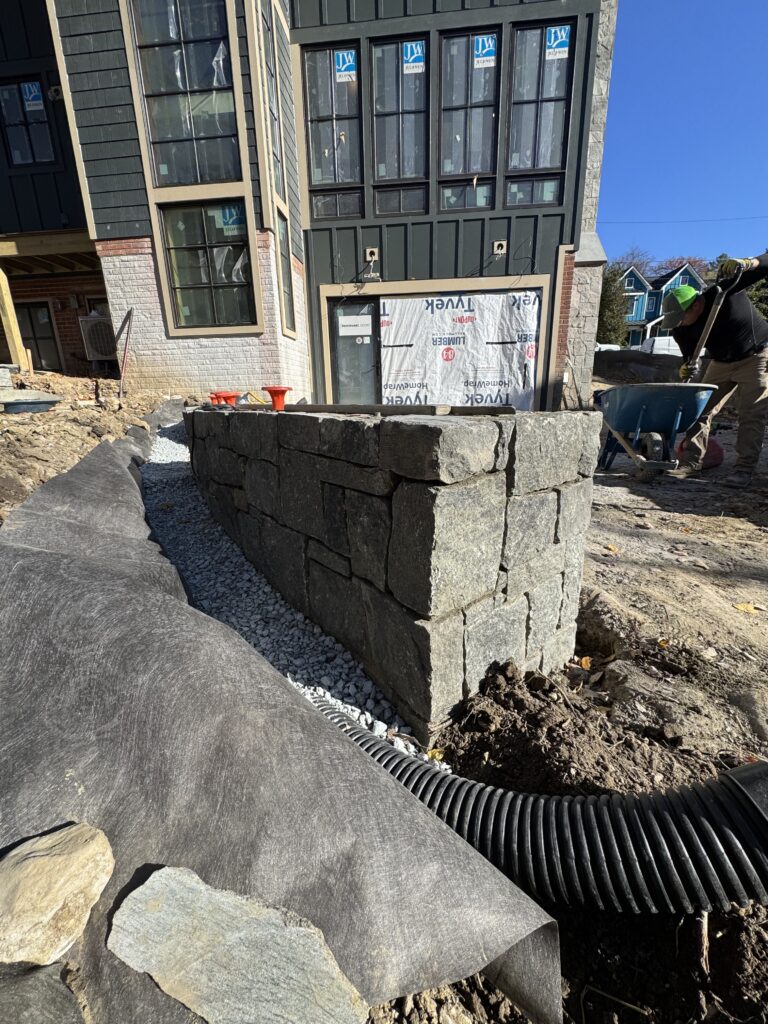
Landscape planning before building a new home might not be the first thing on your mind, but it should be. With so many decisions to make about floor plans, kitchens, bathrooms, windows, and finishes, it’s easy to overlook everything outside the house. But the decisions made during construction can have a lasting impact on how your property looks, functions, and feels for years to come.
It’s a long list. And somewhere along the way, it’s easy to forget about everything outside the house.
We see it more often than you might think. A beautiful new home is finished, the driveway is in, and the owners are ready to move in. Then they start thinking about the backyard. That’s when they discover the patio they wanted won’t fit quite where they imagined, water is collecting near the foundation, or the mature trees they hoped to keep didn’t survive construction.
The frustrating part? Many of these problems could have been avoided with a little planning.
Whether you’re building your own home, designing one for a client, or managing a residential construction project, the landscape deserves a place in the conversation from the beginning.
Here are five things we’d encourage you to think about before construction starts.
- Grading and Drainage: Where Is All That Water Going?
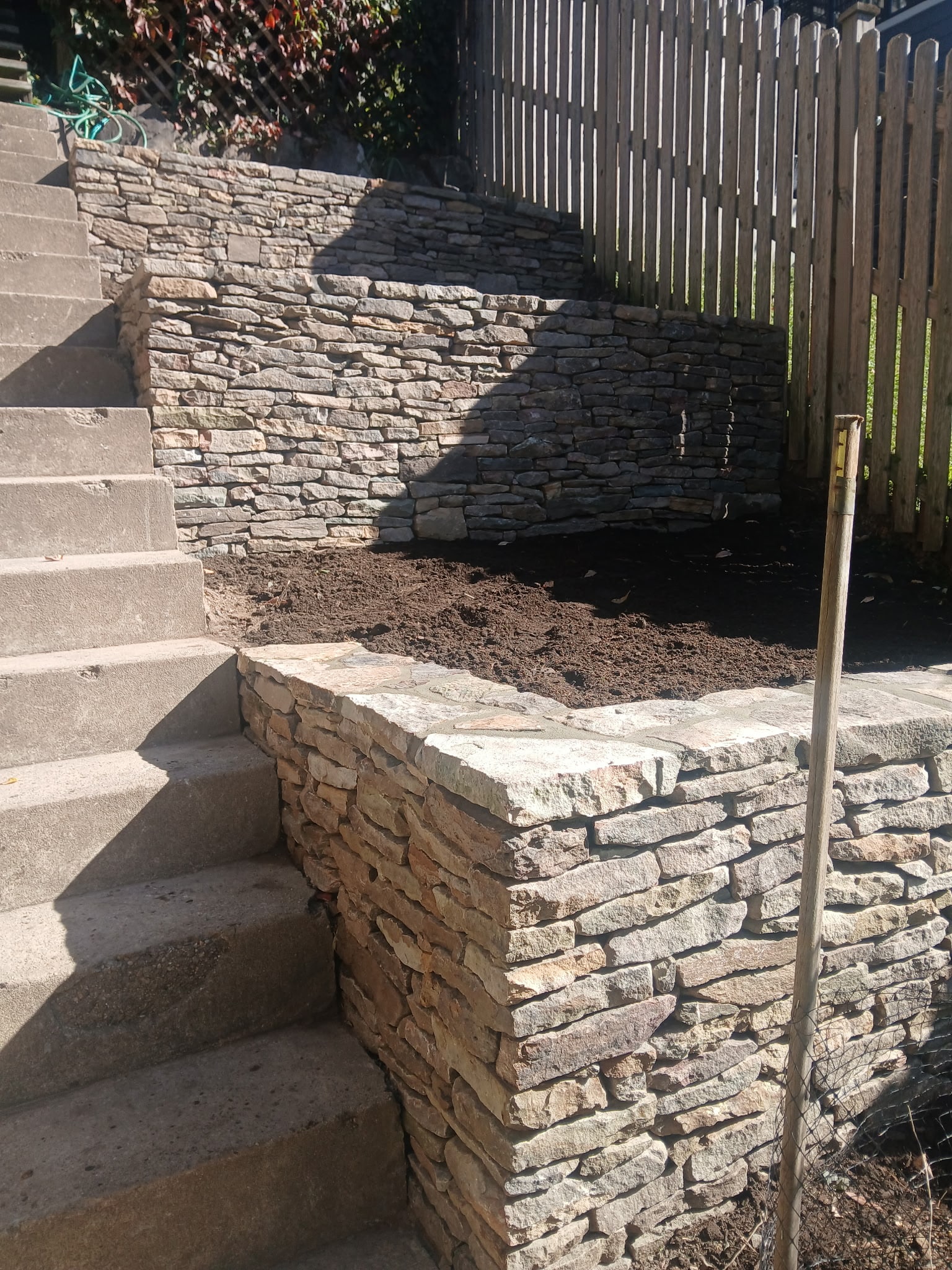 Water doesn’t care how beautiful your new house is. It follows gravity, and if you don’t give it somewhere to go, it will find its own way.
Building a home changes the way water moves across a property. Excavation, foundation work, driveways, patios, and changes in elevation can all affect existing drainage patterns.
Get this wrong, and you could be dealing with water against the foundation, soggy lawn areas, eroding slopes, or drainage problems that affect your neighbors.
Before construction begins, take a good look at the property’s existing grades and think about what will change once the house is built.
A few things to consider:
- How will water drain away from the home’s foundation?
- Where will roof runoff go?
- Are retaining walls needed to manage changes in elevation?
- Will the driveway or patio create new drainage challenges?
- Are there existing low spots or areas where water naturally collects?
Here’s the important part: drainage shouldn’t be something you try to figure out after the house is finished. It’s much easier to address grading and drainage while the property is already under construction.
- Existing Trees: Don’t Lose What You Already Have
Mature trees are one of the best features a property can have. They provide shade, privacy, character, and a sense of maturity that simply can’t be recreated overnight.
Unfortunately, construction can be hard on trees.
Heavy equipment, excavation, soil compaction, material storage, and changes in grade can all damage tree roots. And here’s the tricky part: you may not see the damage right away. A tree can look perfectly healthy when construction wraps up and begin declining a year or two later.
Before the equipment arrives, identify which trees are worth saving and make sure they’re protected.
That means:
- Identifying healthy, mature trees to preserve.
- Establishing tree protection zones before construction begins.
- Keeping equipment, vehicles, and building materials away from protected areas.
- Avoiding unnecessary excavation and grade changes near tree roots.
- Incorporating existing trees and natural features into the landscape design.
A 40-year-old oak tree is worth protecting. You can’t replace it by making a quick trip to the garden center.
- Outdoor Living: Think Beyond the Back Door
When people build a new home, they spend a lot of time thinking about the kitchen, family room, and primary bedroom. But how much thought goes into the spaces where they’ll actually spend time outdoors?
A patio, outdoor kitchen, fire pit, or pool shouldn’t be an afterthought. These spaces can become some of the most-used areas of the property, especially when they’re designed to work naturally with the house.
Think about how you want to use your backyard. Are you someone who loves entertaining? Do you picture quiet mornings with coffee outside? Maybe you want a place for the kids to play or a comfortable spot to gather with friends around a fire.
Some possibilities include:
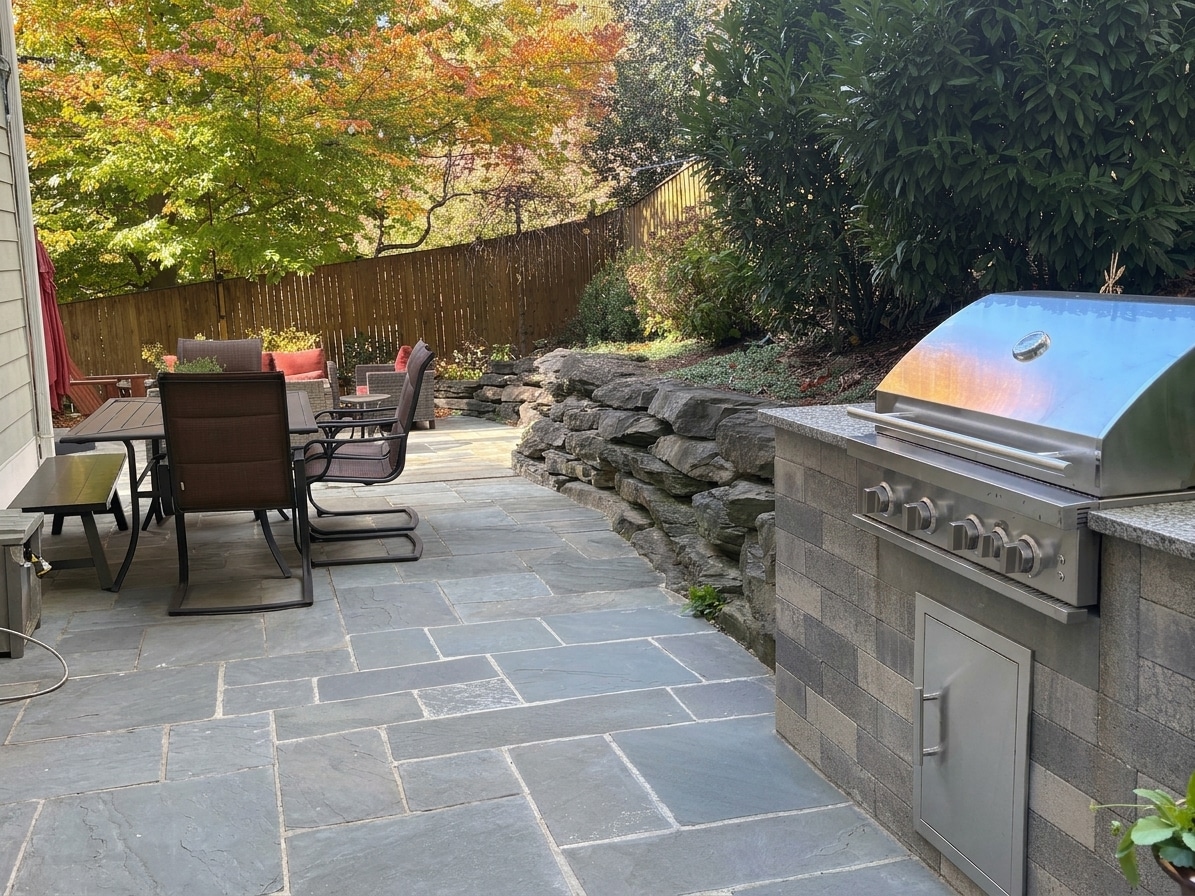
- A patio for dining and entertaining.
- An outdoor kitchen or built-in grill.
- A fire pit or outdoor fireplace.
- A swimming pool and surrounding lounge areas.
- A pergola or pavilion for shade.
- Walkways that connect different outdoor spaces.
- Private garden areas for relaxing.
Just as important is how these spaces connect to the house. A patio right off the kitchen makes outdoor dining convenient. A walkout basement might be the perfect place for a second outdoor living area.
The point is to think about the entire property, not just the footprint of the house. It’s a lot easier to make these spaces work when they’re part of the original plan.
- Utilities and Infrastructure: Think Ahead Before Everything Gets Covered Up
This one isn’t particularly exciting, but it can save you a lot of money.
Landscape lighting, irrigation, outdoor outlets, gas lines, and drainage systems all require some planning. And once the driveway, patios, and walkways are installed, adding those things can become a much bigger job.
Imagine deciding two years after moving in that you’d love landscape lighting along your walkway. Great idea. Except now someone has to work around the finished walkway, established planting beds, and lawn.
A little preparation during construction could have made the job much easier.
Think about installing the necessary connections and pathways for:
- Landscape lighting and outdoor electrical outlets.
- Gas lines for grills, outdoor kitchens, and fire features.
- Water connections for irrigation and outdoor kitchens.
- Sleeves beneath driveways and walkways for future utilities.
- Drainage pipes and connections.
- Possible future additions to your outdoor living spaces.
You don’t have to install everything right away. But putting the infrastructure in place while the property is under construction can make future improvements much easier and less expensive.
It’s one of those things you’ll probably never notice if it’s done right. And that’s exactly the point.
- A Landscape Master Plan: Have a Vision for the Whole Property
Here’s where everything comes together.
One of the biggest mistakes we see is treating landscaping as the last item on the construction checklist. The house gets built, the driveway goes in, and then someone starts thinking about what to do with the yard.
That’s often when things get pieced together without much thought about how they relate to one another.
A landscape master plan changes that. It looks at the entire property and creates a vision for how all the outdoor elements will work together.
That might include:
- Planting beds, trees, shrubs, and perennial gardens.
- Patios, walkways, and retaining walls.
- Outdoor kitchens and entertaining spaces.
- Grading and drainage.
- Landscape lighting and irrigation.
- Privacy screening.
- Lawn and recreational areas.
And no, you don’t have to build everything at once.
A good master plan gives you a roadmap. Maybe you install the patio and outdoor kitchen first, add planting beds the following year, and tackle landscape lighting after that. As long as everything is designed with the bigger picture in mind, the property will come together naturally.
Without a plan, it’s easy to spend money on individual improvements that don’t quite work together. A little thought up front can make a big difference.
Get Your Landscape Contractor Involved Early
We understand that when you’re building a home, there are a hundred things competing for your attention. Landscaping might not seem like the most urgent item on the list.
But getting a landscape professional involved early can make a real difference.
Working with your landscape contractor, builder, and architect before construction begins gives everyone a chance to look at the property as a whole. It helps identify potential problems, coordinate the work, and make sure opportunities aren’t missed.
It can also save money. Planning for drainage, protecting existing trees, installing underground utilities, and coordinating outdoor living spaces are all easier when they’re considered before construction is complete.
At Allentuck Landscaping Co., we’ve been designing and building residential landscapes in Montgomery County, Maryland, since 1986. We’ve learned that the best projects don’t happen by accident. They start with good planning and people working together.
A new home is a big investment. The property surrounding it deserves the same attention.
Don’t wait until the house is finished to start thinking about the landscape. Start planning early, and you’ll have a much better chance of creating a property you’ll love for years to come.
Frequently Asked Questions
When should I hire a landscape contractor when building a new home?
The earlier, the better. Ideally, bring a landscape contractor into the conversation during the initial design stages. This allows time to coordinate grading, drainage, tree preservation, outdoor living spaces, and underground utilities before construction begins.
Do I need a landscape master plan before building a house?
We strongly recommend it. A landscape master plan helps you see how the entire property will come together. It also gives you a realistic idea of costs and allows you to complete the work in phases without losing sight of the overall design.
Can I wait until after construction to do my landscaping?
Of course. Many homeowners wait until the house is finished before installing their landscape. But that doesn’t mean you should wait to plan it. Addressing grading, drainage, tree protection, and underground infrastructure early can prevent expensive headaches later.
Ready to start planning? Allentuck Landscaping Co. can help you think through the possibilities and create a landscape plan that makes the most of your property. Let’s start the conversation before the first shovel hits the ground.
Allentuck Landscaping Company is Your Residential Landscape Company
Phone: 301-515-1900
At Allentuck Landscaping Company, our mission is to create beautiful environments for people to enjoy. We see landscaping as a way to improve people’s lives.
The Allentuck Landscaping Company team has been delighting homeowners in Maryland, Washington DC and Northern Virginia for over 28 years with our turnkey approach to landscape design, installation, construction and maintenance. Most companies try to serve many types of customers at the same time; homeowners, shopping centers, office buildings and the list goes on. At Allentuck Landscaping Company, we focus on one customer, you, the homeowner. We have a singular focus on bringing you the best landscape practices, the best customer service, and the best value for your home.
Services Provide – Master Landscape Plans, Complete Maintenance Programs, Plantings, Patios, Walkways, Retaining Walls, Water Features, Outdoor Lighting, Outdoor Kitchens, Trellises & Pergolas, Irrigation Systems, Drainage Solutions, Grading & Sodding. Fire Pits & Fire Places, Spring Clean Ups, Decks, Fences
Areas Served – Chevy Chase, Bethesda, Potomac, Rockville, North Potomac, Darnestown, Gaithersburg, Germantown, Travilah, Damascus, Boyds, Clarksburg, Ijamsville, Urbana, Frederick and Washington DC.
Allentuck Landscaping Co. is a proud member of the National Association of Landscape Professionals and MyLandscapeAcademy.
13711 Travilah Rd, Rockville, MD 20850
(301) 515-1900