
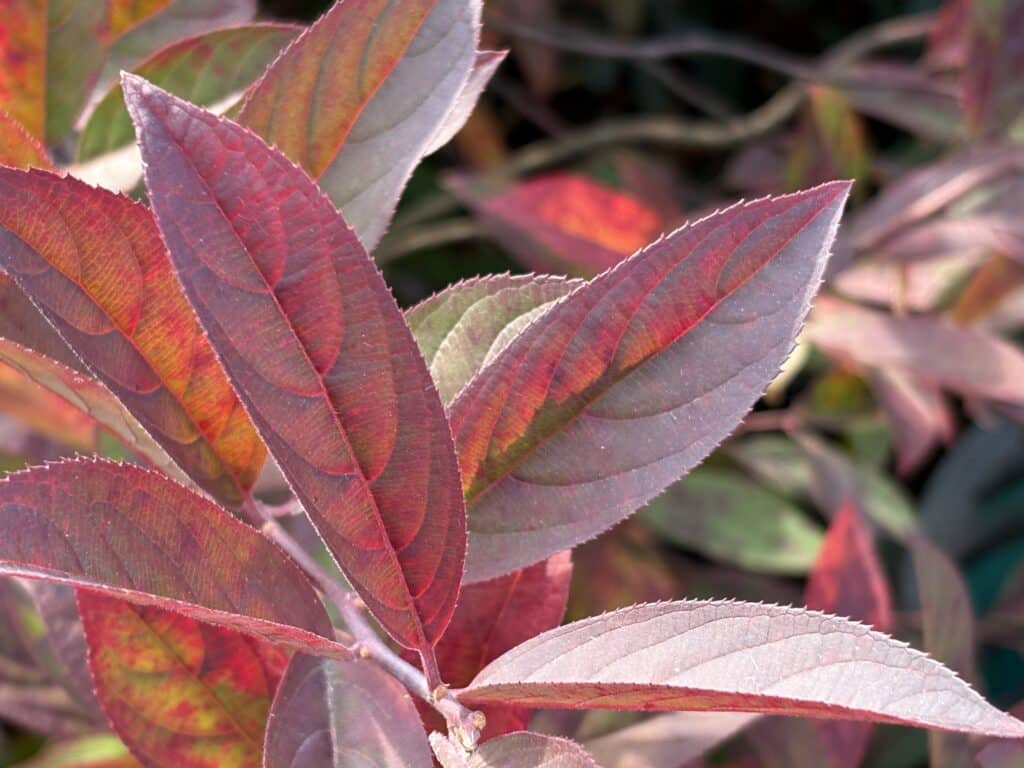
Every autumn, as the air turns crisp and the morning light softens, we catch ourselves staring at the trees. There’s something magical about the way green leaves shift into brilliant oranges, reds, and golds. In landscaping terms? That gorgeous transition is all about fall leaf color — and yes, there’s real science behind it.
The Green Stage: What’s Behind the Summer Leaves
During spring and summer, your trees’ leaves are hard at work. They’re tiny factories, using the green pigment chlorophyll to turn sunlight, water, and carbon dioxide into sugars and starches that fuel the tree’s growth.
But there’s more going on than meets the eye. Hidden beneath that green are pigments like carotene (responsible for those orange tones) and xanthophyll (behind the yellows). They’re there all along — they just don’t get their moment in the sun because chlorophyll is so dominant.

The Transition: When Green Fades and Fall Arrives
As days grow shorter and temperatures dip, leaves stop producing new food. Chlorophyll begins to break down, revealing the underlying yellows and oranges that have been hiding all summer. That’s when fall leaf color really starts to shine.
Some trees add even more drama. Anthocyanins — another pigment — are what give maples, dogwoods, and sumacs their rich reds and purples. Every species has its own color chemistry, which is why no two fall landscapes ever look the same.
The Finale: How Weather Impacts Fall Leaf Color
Here’s where things get interesting: the weather can make or break your fall display. Sunny days and cool (but not freezing) nights help trees produce more anthocyanins, deepening reds and purples. On the flip side, too much rain, early frost, or warm nights can dull the brilliance.
And while the colors grab all the attention, trees are quietly preparing for winter. A thin layer of cells forms where the leaf stem meets the branch, eventually cutting it loose. That’s how the leaf falls — nature’s clean break before dormancy.
Bringing It Home: Designing for Fall Leaf Color
At Allentuck Landscaping Co., we’ve been designing and installing walkways, patios, and landscapes for over 35 years. We know fall isn’t just the end of the growing season — it’s one of the most beautiful times of year to showcase your property.
When you plan your yard with fall leaf color in mind, you’re not just creating pretty views; you’re crafting an experience. Imagine walking along a winding path surrounded by amber and crimson trees, relaxing by a fire pit framed with copper-toned shrubs, or hosting friends on a patio that feels warmer because the landscape glows. That’s what thoughtful design does — it improves life through landscaping.
Key Takeaways for Homeowners
-
Chlorophyll hides other pigments during summer; when it breaks down, fall colors emerge.
-
Anthocyanins bring out vibrant reds and purples in certain trees.
-
The best fall leaf color comes from sunny days and cool nights.
-
Choose trees and shrubs that offer layered color, and pair them with hardscape features that highlight the season.
-
With 35+ years of experience, Allentuck Landscaping Co. knows how to design outdoor spaces that make fall unforgettable.
Related Posts:
The Benefits of Lawn Aeration, Overseeding, and Topdressing
How Much Does An Outdoor Kitchen Cost in the Rockville, MD Area?
Allentuck Landscaping Company is Your Residential Landscape Company
Phone: 301-515-1900
At Allentuck Landscaping Company, our mission is to create beautiful environments for people to enjoy. We see landscaping as a way to improve people’s lives.
The Allentuck Landscaping Company team has been delighting homeowners in Maryland, Washington DC and Northern Virginia for over 28 years with our turnkey approach to landscape design, installation, construction and maintenance. Most companies try to serve many types of customers at the same time; homeowners, shopping centers, office buildings and the list goes on. At Allentuck Landscaping Company, we focus on one customer, you, the homeowner. We have a singular focus on bringing you the best landscape practices, the best customer service, and the best value for your home.
Services Provide – Master Landscape Plans, Complete Maintenance Programs, Plantings, Patios, Walkways, Retaining Walls, Water Features, Outdoor Lighting, Outdoor Kitchens, Trellises & Pergolas, Irrigation Systems, Drainage Solutions, Grading & Sodding. Fire Pits & Fire Places, Spring Clean Ups, Decks, Fences
Areas Served – Chevy Chase, Bethesda, Potomac, Rockville, North Potomac, Darnestown, Gaithersburg, Germantown, Travilah, Damascus, Boyds, Clarksburg, Ijamsville, Urbana, Frederick and Washington DC.
Allentuck Landscaping Co. is a proud member of the National Association of Landscape Professionals and MyLandscapeAcademy.
13711 Travilah Rd, Rockville, MD 20850
(301) 515-1900