
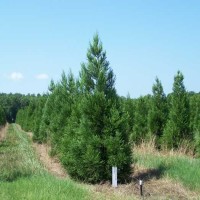
6 Plants For Creating a Deer Resistant Plant Screen
Are you tired of your garden becoming a buffet for local deer? Fear not! Creating a Deer Resistant Plant Screen is your ticket to reclaiming your outdoor space. By strategically selecting plants that deer tend to avoid, you can build a lush and protective barrier that keeps these hungry visitors at bay. In this guide, we’ll unveil six resilient plant species that not only thrive in various garden settings but also serve as formidable guardians against deer browsing. Say goodbye to garden munchers and hello to a thriving, deer-resistant paradise right in your backyard.
Criteria To Consider When Selecting Screening Plants
Selecting the right screening plant is crucial for achieving both aesthetic appeal and practical functionality in your landscape design. Begin by considering the specific requirements of your space, such as sunlight exposure, soil type, and available space for growth. Evaluate the desired height and width of the screen to determine the appropriate plant species.
Look for plants with low maintenance needs to ensure long-term success and enjoyment. Additionally, consider the visual aspects, such as texture, color, and growth habit, to create a harmonious and visually appealing screen that enhances the overall beauty of your outdoor space. By carefully assessing these factors and selecting suitable screening plants, you can create a verdant sanctuary that offers both seclusion and charm.
What Does Deer Resistant Really Mean?
In a perfect world, there would be a list of plants that deer never eat. Unfortunately, that simply does not exist. However, there are plants that deer do not like. With that being said, it is reasonable to accept that deer will taste just about any plant, and then leave the ones they do not like alone. Although there will be some damage from the “tasting”, it will be minimal and the plants should be just fine.
Plants To Consider For a Deer-Resistant Screen
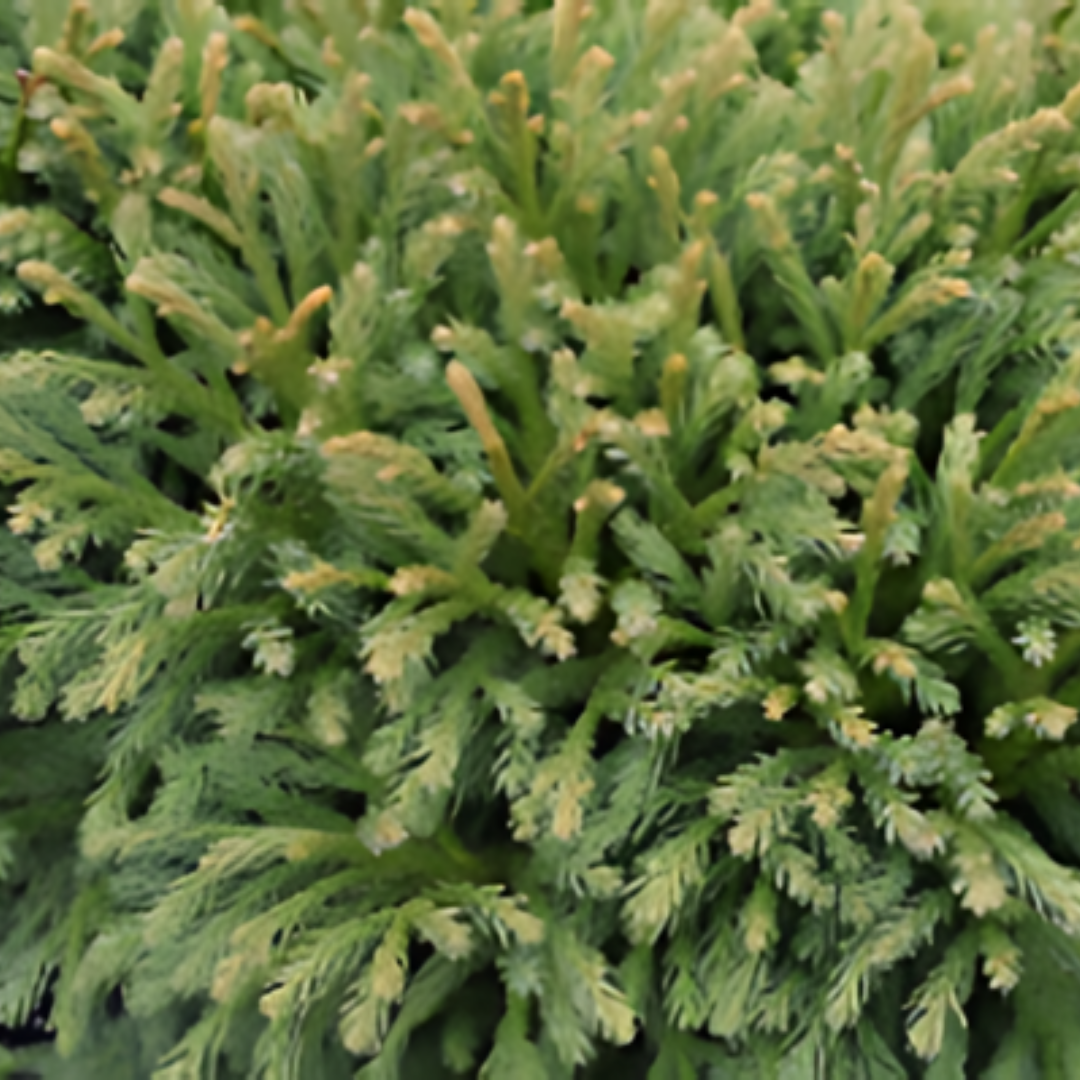
Japanese Cedar ‘Yoshino’ (Cryptomeria japonica ‘Yoshino’)
Cryptomeria japonica ‘Yoshino’ is not just a pretty face; it’s a versatile performer that knows how to make an impact without taking up too much space. While it starts as a modest-sized tree, it can reach heights of up to 20-30 feet tall at maturity, with a width of around 10-15 feet. This means it’s perfect for smaller yards or tight spaces where you need a bit of privacy without overwhelming the landscape. Its manageable size also makes it easy to prune or shape to fit your specific needs, whether you’re creating a cozy nook or a full-fledged privacy screen. So, whether you’re working with a postage stamp-sized plot or a sprawling backyard, Yoshino Cedar has the size and style to suit your space.
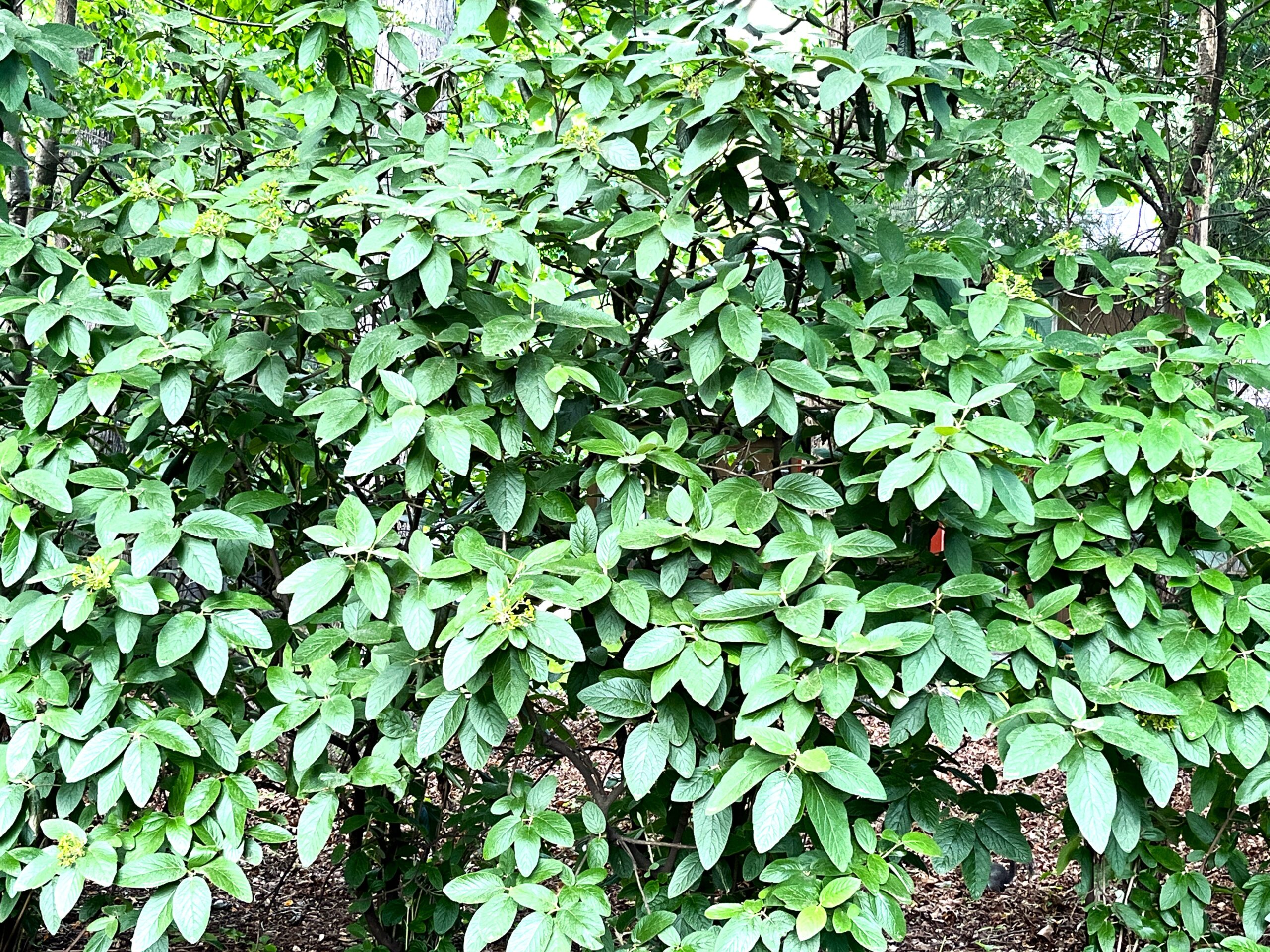
Leatherleaf Viburnum (Viburnum rhytidophyllum)
Leatherleaf Viburnum isn’t just about foliage – it’s a multi-talented performer that dazzles with its flowers and berries. In late spring to early summer, it bursts into bloom with clusters of creamy white flowers that perfume the air with their sweet fragrance, attracting pollinators like bees and butterflies to your garden. As summer fades into fall, these flowers give way to stunning metallic blue-black berries, adding a pop of color and providing food for birds during the colder months. Not only does Leatherleaf Viburnum provide year-round privacy and beauty, but it also contributes to the biodiversity of your garden, making it a win-win for both you and the local wildlife.
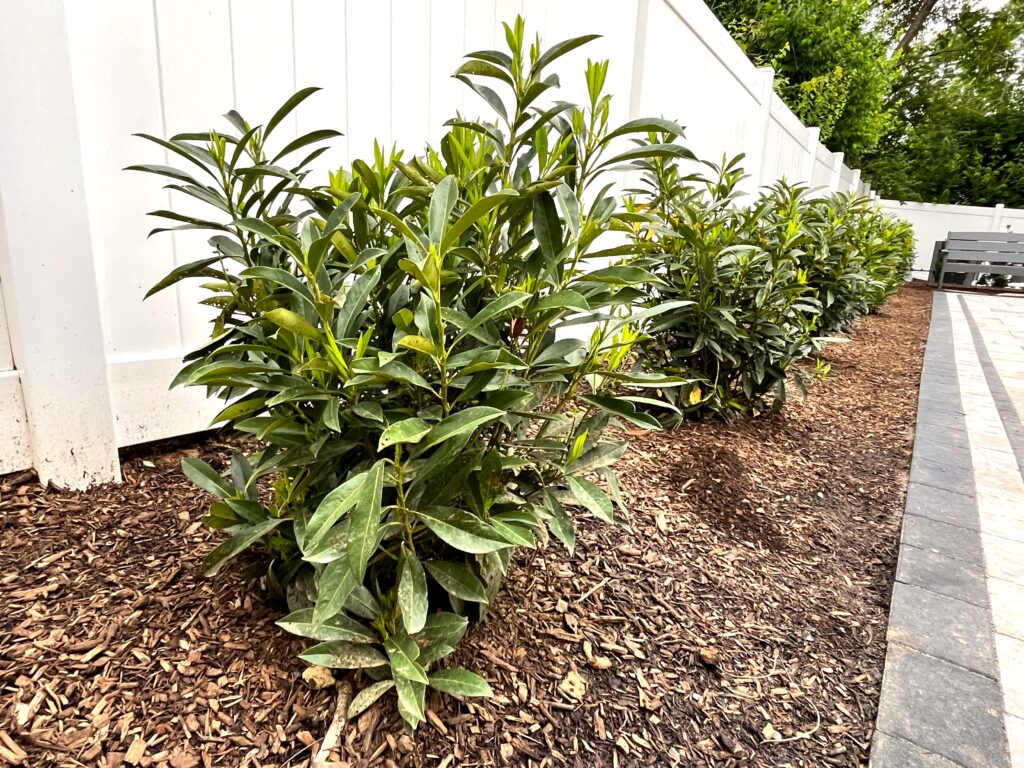 Skip Laurel (Prunus laurocerasus ‘Schipkaensis’)
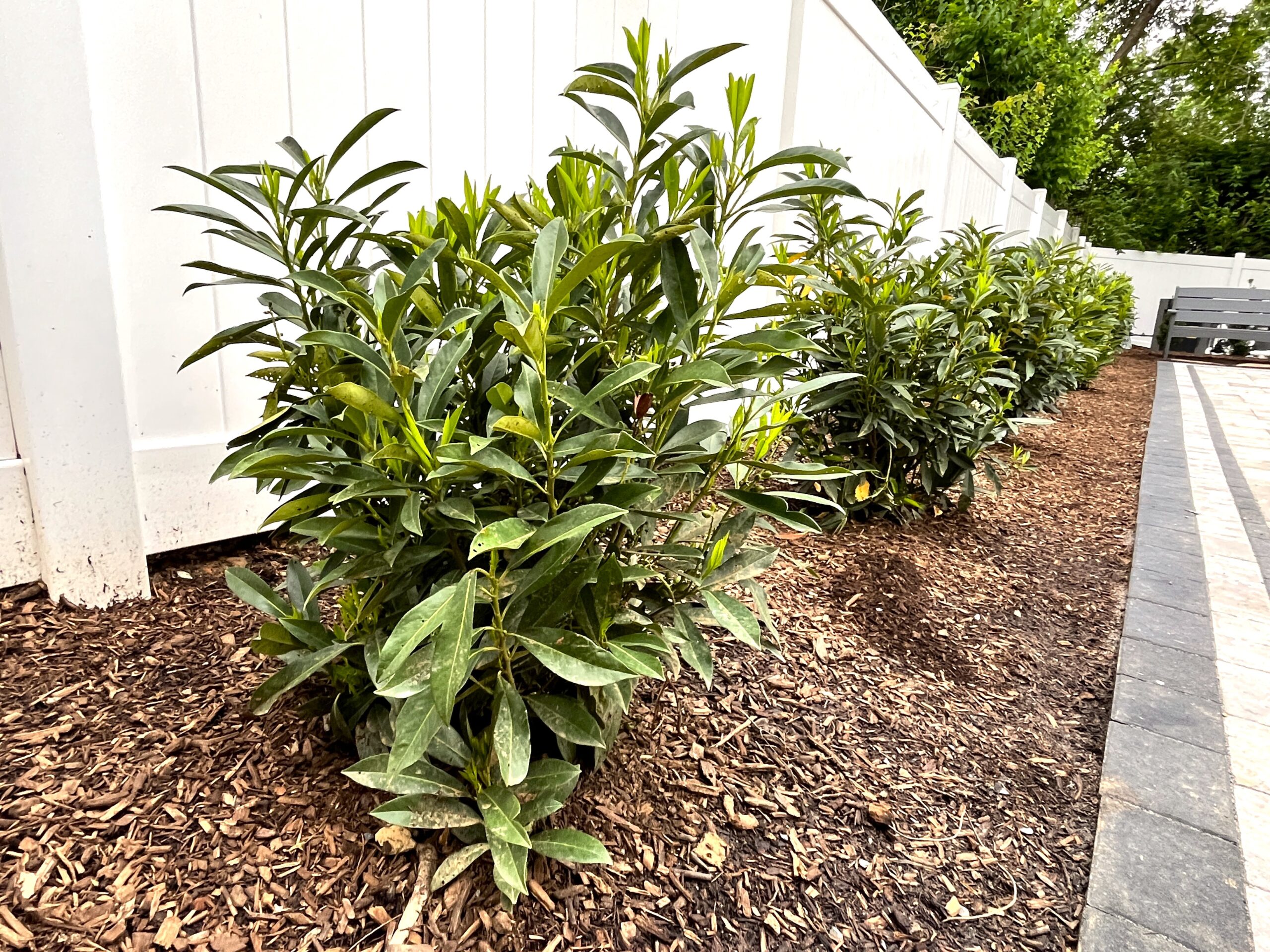
Prunus laurocerasus ‘Schipkaensis’, commonly known as Schip Laurel or Skip Laurel, is the unsung hero of privacy in the plant world – reliable, resilient, and effortlessly elegant. With its lush, glossy foliage and compact, dense growth habit, it’s like having a natural green wall in your backyard. But what sets Schip Laurel apart is its versatility.
Whether you need a tall hedge to shield your space from prying eyes or a low border to define your garden beds, this evergreen shrub delivers, growing up to 10-12 feet tall and 6-8 feet wide. And let’s not forget about the blooms – in spring, it puts on a show with clusters of fragrant white flowers that beckon pollinators and fill the air with their sweet scent. Plus, come fall, it produces small, dark berries that add a touch of charm to the landscape. If you’re looking for a plant that combines beauty, functionality, and ease of care, Schip Laurel is your go-to guy.
 Little Gem Magnolia (Magnolia grandiflora ‘Little Gem’)
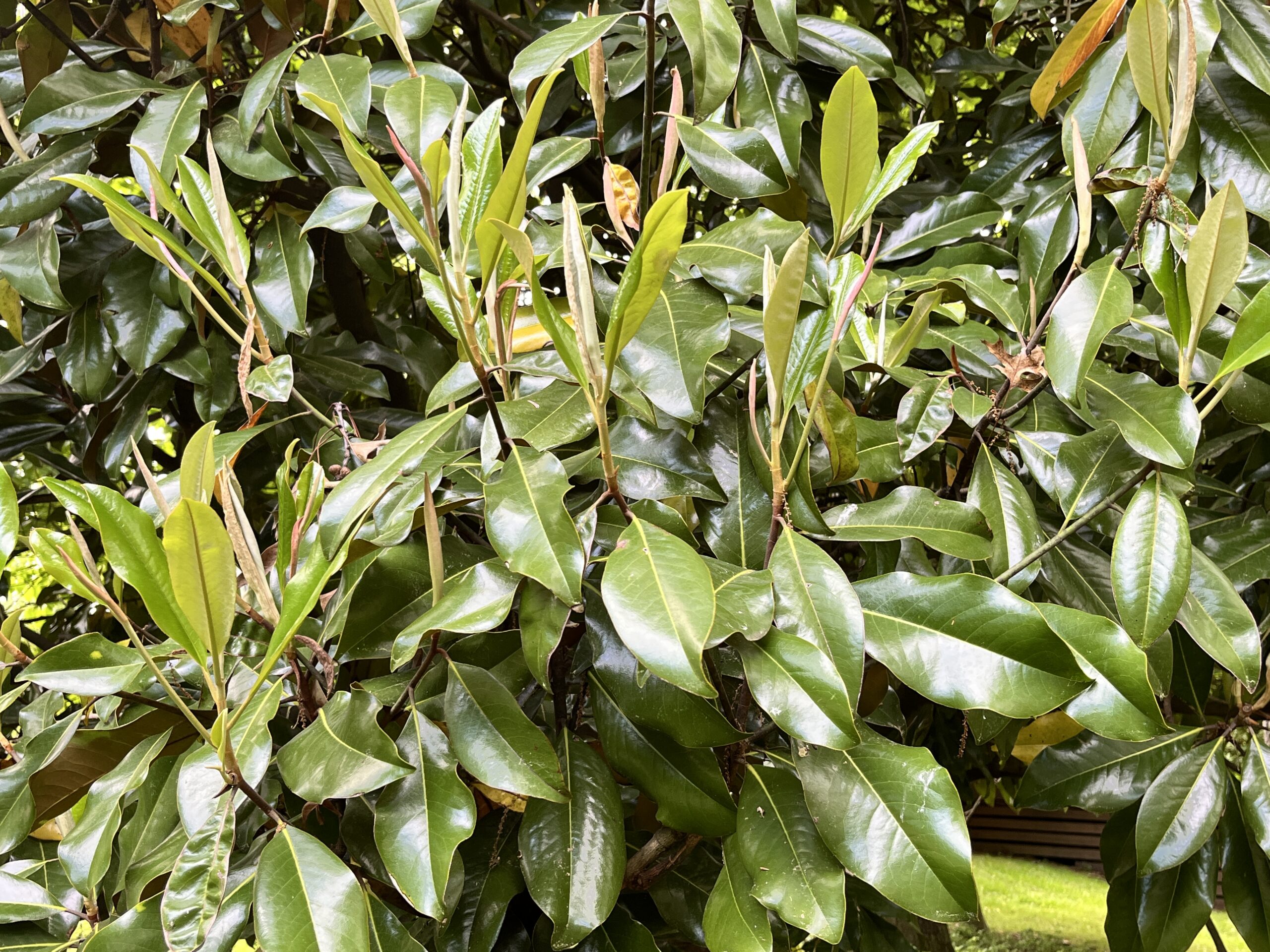
Magnolia grandiflora ‘Little Gem’, aptly named for its compact size and stunning beauty, is like a little treasure in your garden – small in stature but big on impact. This evergreen magnolia shrub boasts glossy, dark green foliage with a bronze underside, providing year-round interest and adding a touch of luxury to any landscape. But the real showstopper? Its exquisite, creamy white flowers that appear in spring and summer, exuding a sweet fragrance that fills the air and attracts admiring gazes from all who pass by.
Despite its diminutive size, ‘Little Gem’ can reach heights of up to 20 feet tall and 10 feet wide, making it ideal for smaller gardens, tight spaces, or as a focal point in mixed borders. Plus, it’s low-maintenance and deer-resistant, so you can enjoy its beauty without the hassle of constant upkeep or pesky garden visitors. Ff you’re searching for a compact yet stunning addition to your garden, look no further than ‘Little Gem’ – the perfect gem for any green space.
 Northern Bayberry (Myrica pensylvanica)
Myrica pensylvanica, known as Northern Bayberry, is like the cool, laid-back friend in your garden – unassuming yet full of surprises. This native shrub offers a unique blend of beauty, resilience, and functionality that sets it apart. With its aromatic, leathery leaves and distinctive grayish-brown bark, it adds texture and interest to any landscape year-round. But what makes Northern Bayberry truly special are its waxy, bluish-gray berries that appear in late summer and persist through winter, providing food for birds and adding a pop of color to the winter landscape. And let’s not forget about its other talents – it’s salt-tolerant, making it perfect for coastal gardens, and its dense growth habit makes it an excellent choice for hedges, screens, or erosion control.
Myrica pensylvanica is low-maintenance and deer-resistant, so you can enjoy its beauty without the hassle of constant upkeep or pesky garden visitors. So, whether you’re looking to add a touch of coastal charm to your garden or create a natural barrier against wind and noise, Northern Bayberry is the versatile, easy-going companion you’ve been searching for.
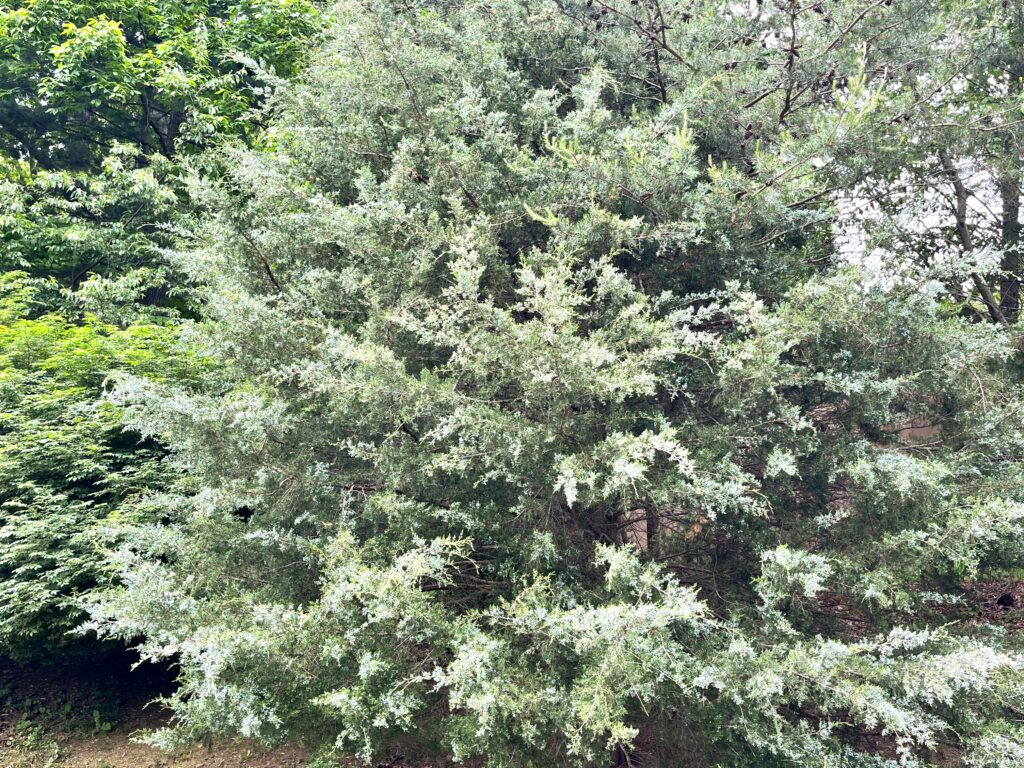 Eastern Red Cedar (Juniperus virginiana )
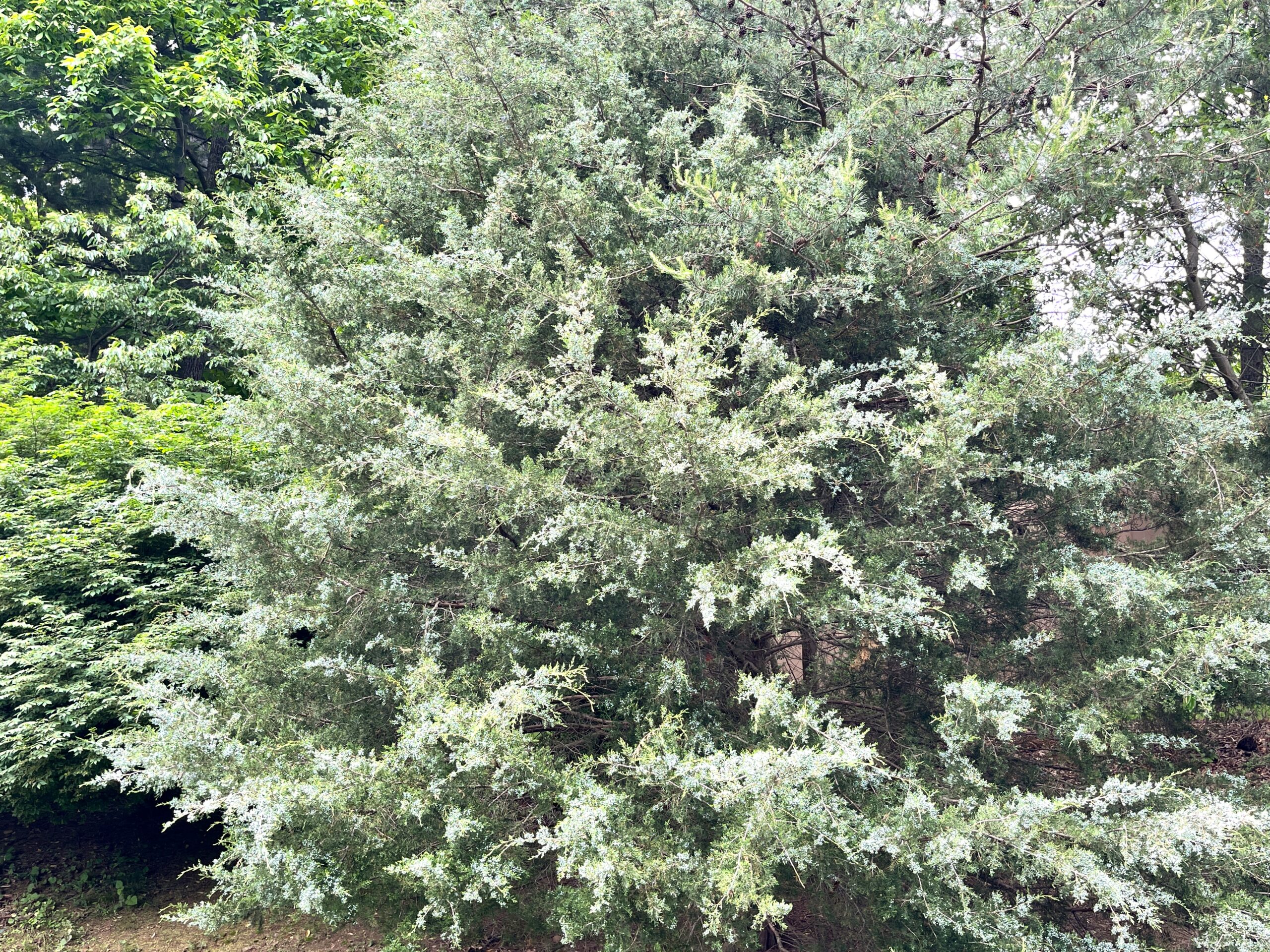
Juniperus virginiana, commonly known as Eastern Red Cedar, is like the steadfast guardian of your garden – reliable, resilient, and unyielding. This native evergreen tree exudes rustic charm with its aromatic, scale-like foliage and attractive reddish-brown bark that peels in strips, adding texture and interest to the landscape.
Despite its name, it’s not a true cedar but a juniper, known for its hardiness and adaptability to various growing conditions. Eastern Red Cedar thrives in full sun to partial shade and tolerates poor soil, drought, and urban pollution with ease, making it a versatile choice for a wide range of garden settings. Its dense, conical form makes it ideal for privacy screens, windbreaks, or as a focal point in the landscape. Its bluish-gray berries provide food for birds and wildlife throughout the year, adding to its ecological value.
Whether you’re seeking year-round greenery, wildlife habitat, or a natural barrier against the elements, Eastern Red Cedar stands tall as a timeless symbol of strength and resilience in the garden.
More to consider: although each of these plants can make a wonderful screen in their own right, some of the best deer resistant plant screens we have seen involve using several varieties of plants used in groupings. After all, variety is the spice of life!
Similar Posts:
6 Things You Need To Know About Winter Deer Damage
8 Perennials Rarely Damaged By Deer In Montgomery County, Maryland
Allentuck Landscaping Company is Your Residential Landscape Company
Phone: 301-515-1900
At Allentuck Landscaping Company, our mission is to create beautiful environments for people to enjoy. We see landscaping as a way to improve people’s lives.
The Allentuck Landscaping Company team has been delighting homeowners in Maryland, Washington DC and Northern Virginia for over 28 years with our turnkey approach to landscape design, installation, construction and maintenance. Most companies try to serve many types of customers at the same time; homeowners, shopping centers, office buildings and the list goes on. At Allentuck Landscaping Company, we focus on one customer, you, the homeowner. We have a singular focus on bringing you the best landscape practices, the best customer service, and the best value for your home.
Services Provide – Master Landscape Plans, Complete Maintenance Programs, Plantings, Patios, Walkways, Retaining Walls, Water Features, Outdoor Lighting, Outdoor Kitchens, Trellises & Pergolas, Irrigation Systems, Drainage Solutions, Grading & Sodding. Fire Pits & Fire Places, Spring Clean Ups, Decks, Fences
Areas Served – Chevy Chase, Bethesda, Potomac, Rockville, North Potomac, Darnestown, Gaithersburg, Germantown, Travilah, Damascus, Boyds, Clarksburg, Ijamsville, Urbana, Frederick and Washington DC.
Allentuck Landscaping Co. is a proud member of the National Association of Landscape Professionals and MyLandscapeAcademy.
13711 Travilah Rd, Rockville, MD 20850
(301) 515-1900