
Retaining Wall Materials Comparison: Find the Best Option for Your Yard
Retaining walls do more than just hold back soil—they add structure, style, and functionality to your landscape. Whether you need to manage a slope, prevent erosion, or create a level space for a garden or patio, choosing the right retaining wall materials matter.
But here’s the thing: Not all materials are created equal. Some last longer, others look more natural, and some are easier on the wallet. So, how do you decide which one is right for your project?
At Allentuck Landscaping Co., we’ve been building beautiful, durable retaining walls for homeowners in Rockville, MD and surrounding areas for over 38 years. In this guide, we’ll break down the most popular retaining wall materials to help you choose the best one for your yard.
Factors to Consider When Choosing a Retaining Wall Material
Before jumping into the materials, there are a few key things to keep in mind:
- Durability: You want something that will last for years, not something you’ll have to replace after a few seasons.
- Cost: Some materials are more budget-friendly than others.
- Looks: Do you want a rustic, natural vibe or something more polished?
- Maintenance: How much upkeep are you willing to commit to?
- Drainage: Good drainage is crucial for preventing damage to your wall.
- Height: If you need a tall wall, some materials are better suited for the job.
Now, let’s get into the specifics.
 Dry Stone Retaining Walls
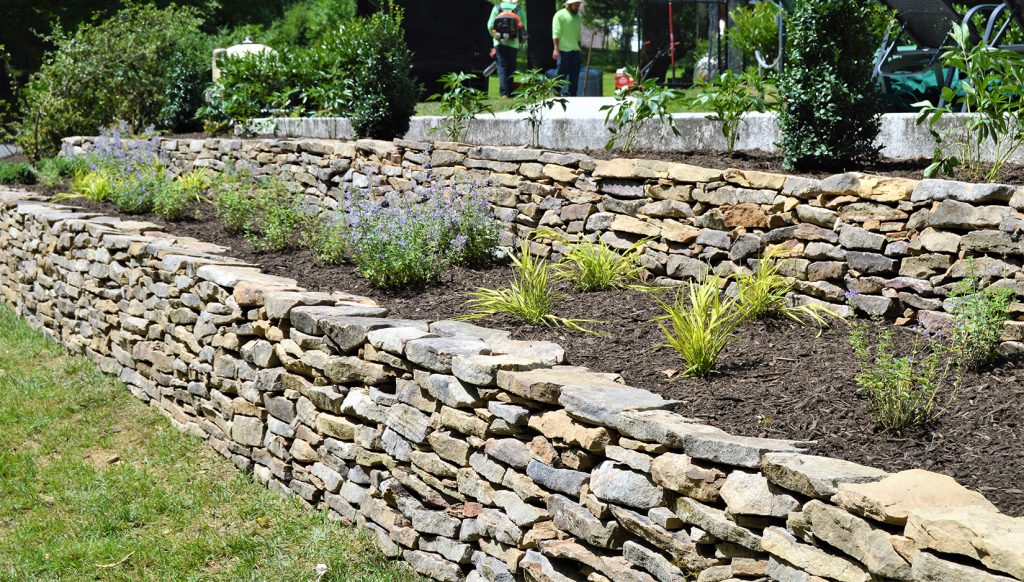
Dry stone walls are the epitome of rustic charm. These walls are built without mortar, letting the stones fit together naturally. They’re strong and allow water to pass through, making them great for drainage.
Pros:
- Gorgeous, natural look.
- No mortar means natural drainage (no need to worry about water buildup).
- Very eco-friendly.
Cons:
- Can be labor-intensive to build and requires a skilled hand.
- The stones may shift over time, especially in freeze-thaw cycles.
Best For: If you love a rustic, natural look and want a wall that blends into the environment, dry stone is your go-to. Perfect for gardens and sloped areas where water drainage is a concern.
Mortared Stone Retaining Walls
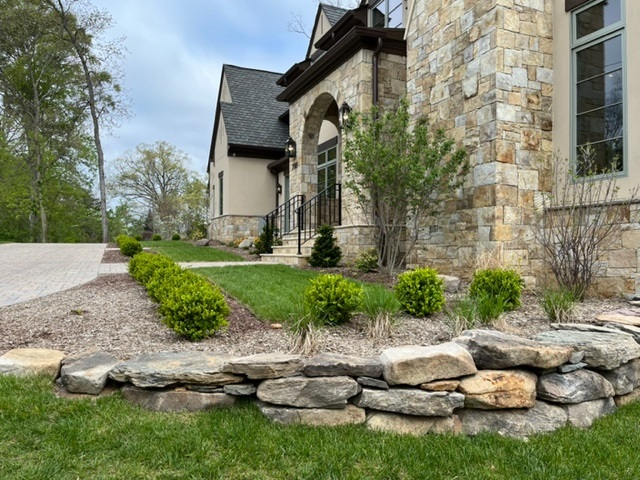
Want the look of stone but with a bit more stability? Mortared stone walls have stones set with mortar for a more solid, polished finish. These walls are durable and can handle heavier loads.
Pros:
- Super durable and long-lasting.
- Less likely to shift over time compared to dry stone.
- Looks more polished and formal.
Cons:
- Higher cost due to the labor and materials involved.
- You’ll need to plan for drainage to avoid water issues.
Best For: Formal landscapes or larger projects where durability is key. If you want a wall that will stand the test of time and look stunning, mortared stone is a solid (pun intended) option.

Brick Retaining Walls
Brick walls bring a classic, timeless appeal to any yard. They’re durable and relatively low maintenance, making them a popular choice for homeowners who want a clean, traditional look.
Pros:
- Classic and elegant, especially if you have brick accents on your home.
- Sturdy and low maintenance.
Cons:
- Limited design flexibility.
- Not ideal for very tall walls or heavy-duty loads.
Best For: If you love the look of traditional brick, this is a great option. Brick works well for smaller walls and complements homes with existing brick features.
Stackable Block Retaining Walls
If you’re looking for something easy to install and budget-friendly, stackable block walls might be your answer. These interlocking blocks come in a range of shapes and colors, making them versatile and functional. Plus, they’re often DIY-friendly for smaller projects.
Pros:
- Affordable and easy to install.
- Available in a wide range of styles.
- Interlocking design adds stability.
Cons:
- Not as natural-looking as stone.
- Taller walls might require professional installation to ensure safety and stability.
 Best For: Homeowners who want a budget-friendly, modern solution for their yard. Stackable blocks are a great choice for simple, straightforward designs.
Cost: $12 to $25 per square foot.
Pressure Treated Timber Retaining Walls
Pressure treated timber walls offer a natural, woodsy feel, perfect for smaller or more rustic landscapes. They’re budget-friendly and easy to work with, but they come with a shorter lifespan compared to stone or brick.
Pros:
- Very affordable.
- Easy to install, especially for DIYers.
- Natural, rustic appearance.
Cons:
- Shorter lifespan (about 10-20 years).
- Susceptible to rot, insects, and warping over time.
Best For: Small projects or landscapes with a rustic, natural design. Timber walls work well when budget is a top priority, but keep in mind they’ll need replacing sooner than other materials.
Some Brands We Like:
Retaining Wall Materials Comparison Chart
| Material | Durability | Aesthetic Appeal | Maintenance | |
|---|---|---|---|---|
| Dry Stone | High | Natural, Rustic | Minimal | |
| Mortared Stone | Very High | Formal, Elegant | Low | |
| Brick | Classic, Traditional | Low | ||
| Stackable Block | High | Versatile, Modern | Minimal | |
| Pressure Treated Timber | Low (10-20 years) | Rustic, Natural | High (due to rot) |
How to Choose the Best Retaining Wall Materials for Your Yard
Choosing the right retaining wall material comes down to what’s most important for your project. Is it durability? A specific look? A tighter budget? At Allentuck Landscaping Co., we’ve helped homeowners in Rockville, MD and surrounding areas make the right call for their landscapes for over 38 years.
If you’re still not sure which material is best for your retaining wall, reach out to us. We’d love to help guide you through the process and create a wall that will stand strong—and look great—for years to come.
FAQs
1. How long do pressure treated timber walls last?
Pressure treated timber walls usually last 10-20 years, depending on the conditions and how well they’re maintained.
2. Can I build a dry stone wall myself?
Dry stone walls can be tricky. While it’s possible for smaller walls, they require a lot of skill to build correctly. For larger or more complex projects, professional installation is recommended.
3. What’s are the most affordable retaining wall materials?
Pressure treated timber is usually the most affordable option, but keep in mind that it has a shorter lifespan compared to stone or brick.
Invest in your home’s landscape with Allentuck Landscaping Co. Request an estimate today!
Related Posts:
How Long Should Pressure Treated Timbers Last?
Drainage Problem Solutions For Residential Properties
Allentuck Landscaping Company is Your Residential Landscape Company
Phone: 301-515-1900
At Allentuck Landscaping Company, our mission is to create beautiful environments for people to enjoy. We see landscaping as a way to improve people’s lives.
The Allentuck Landscaping Company team has been delighting homeowners in Maryland, Washington DC and Northern Virginia for over 28 years with our turnkey approach to landscape design, installation, construction and maintenance. Most companies try to serve many types of customers at the same time; homeowners, shopping centers, office buildings and the list goes on. At Allentuck Landscaping Company, we focus on one customer, you, the homeowner. We have a singular focus on bringing you the best landscape practices, the best customer service, and the best value for your home.
Services Provide – Master Landscape Plans, Complete Maintenance Programs, Plantings, Patios, Walkways, Retaining Walls, Water Features, Outdoor Lighting, Outdoor Kitchens, Trellises & Pergolas, Irrigation Systems, Drainage Solutions, Grading & Sodding. Fire Pits & Fire Places, Spring Clean Ups, Decks, Fences
Areas Served – Chevy Chase, Bethesda, Potomac, Rockville, North Potomac, Darnestown, Gaithersburg, Germantown, Travilah, Damascus, Boyds, Clarksburg, Ijamsville, Urbana, Frederick and Washington DC.
Allentuck Landscaping Co. is a proud member of the National Association of Landscape Professionals and MyLandscapeAcademy.
13711 Travilah Rd, Rockville, MD 20850
(301) 515-1900