
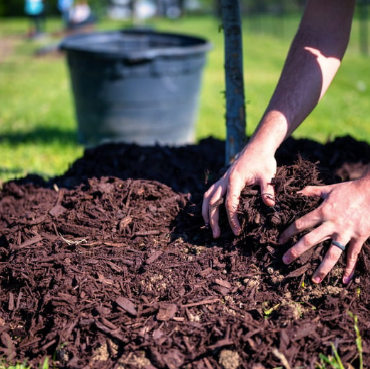
Mulch is one of the easiest ways to make your yard look polished while doing some serious behind-the-scenes work—like holding moisture in the soil, stopping weeds from popping up, and keeping roots cool. But here’s the catch: mulch mistakes are more common than most homeowners realize. And when mulch is used the wrong way, it can damage the very plants you’re trying to protect.
Whether you’ve mulched for years or are just getting started, avoiding these five common errors can make a big difference in the health and appearance of your landscape.
1. Piling Mulch Against Tree Trunks (Also Known as “Volcano Mulching”)
This is one of the most common mulch mistakes out there—and one of the most harmful.
When mulch is piled high against the trunk of a tree, it traps moisture against the bark. That might sound like a good thing, but it’s not. Constant moisture invites rot, disease, and pests. Over time, the tree becomes stressed and weak, and may even die.
What to do instead:
Keep mulch at least 2 to 3 inches away from the base of the tree. Aim for a donut shape rather than a volcano. This allows air to circulate around the trunk and keeps the base dry.
2. Using Too Much Mulch
If a little mulch is good, more must be better, right? Not quite.
Over-mulching is a big mistake. When mulch is applied too thick—think 4 inches or more—it can create a barrier that keeps water and oxygen from reaching plant roots. That’s the opposite of what you want.
Stick to this rule:
Apply mulch in a layer about 2 to 3 inches thick. That’s enough to suppress weeds and hold moisture without suffocating your plants. Already have mulch down? Fluff it up with a rake before adding more. This helps break up any compaction and might reduce how much fresh mulch you need.
3. Ignoring Weeds Before Mulching
Throwing mulch over a bed of weeds won’t stop them. In fact, it’s one of the most overlooked mulch mistakes—giving weeds a cozy blanket to grow under.
Take time to prep the area first.
Pull or cut weeds at the root, and consider applying a layer of newspaper or cardboard underneath your mulch to block new ones from sprouting. Skip landscape fabric in most planting beds—it often causes more problems than it solves by trapping water or making it hard to plant later.
4. Not Replenishing Mulch Regularly
Mulch isn’t a one-and-done task. Organic mulch—like shredded bark, pine straw, or wood chips—breaks down over time. That’s actually a good thing. As it decomposes, it improves your soil. But it also means you’ll need to refresh it periodically.
Here’s what to watch for:
If the mulch looks faded, thin, or patchy—or if you can see bare soil—it’s time for a top-up. A light layer once a year is usually enough. Don’t just keep piling on more without checking the depth first.
5. Mulching Too Close to Plant Crowns and Stems
This mulch mistake is similar to volcano mulching, but it happens with shrubs, perennials, and flowers. When mulch touches the base of a plant, it traps moisture and creates the perfect conditions for rot and fungus.
Keep mulch a few inches away from the crown or stem of each plant.
This gives the plant room to breathe and helps prevent disease. Think of mulch as a protective ring—not a blanket to smother your plants.
Avoid These Mulch Mistakes for a Healthier, Happier Yard
When used the right way, mulch is one of the best tools you have to keep your landscape healthy and attractive. But the wrong approach—like over-mulching, smothering plant stems, or ignoring weed prep—can set you back.
By steering clear of these common mulch mistakes, you’ll create a landscape that thrives with less maintenance and fewer headaches.
Not sure if your mulch is helping or hurting your plants? Take a walk around your yard today and see if any of these tips apply. A few small changes can make a big impact.
Related Posts:
7 Front Walkway Ideas To Make Your Home More Welcoming
Planning to Build a Patio? Our Patio Building Guide
Allentuck Landscaping Company is Your Residential Landscape Company
Phone: 301-515-1900
At Allentuck Landscaping Company, our mission is to create beautiful environments for people to enjoy. We see landscaping as a way to improve people’s lives.
The Allentuck Landscaping Company team has been delighting homeowners in Maryland, Washington DC and Northern Virginia for over 28 years with our turnkey approach to landscape design, installation, construction and maintenance. Most companies try to serve many types of customers at the same time; homeowners, shopping centers, office buildings and the list goes on. At Allentuck Landscaping Company, we focus on one customer, you, the homeowner. We have a singular focus on bringing you the best landscape practices, the best customer service, and the best value for your home.
Services Provide – Master Landscape Plans, Complete Maintenance Programs, Plantings, Patios, Walkways, Retaining Walls, Water Features, Outdoor Lighting, Outdoor Kitchens, Trellises & Pergolas, Irrigation Systems, Drainage Solutions, Grading & Sodding. Fire Pits & Fire Places, Spring Clean Ups, Decks, Fences
Areas Served – Chevy Chase, Bethesda, Potomac, Rockville, North Potomac, Darnestown, Gaithersburg, Germantown, Travilah, Damascus, Boyds, Clarksburg, Ijamsville, Urbana, Frederick and Washington DC.
Allentuck Landscaping Co. is a proud member of the National Association of Landscape Professionals and MyLandscapeAcademy.
13711 Travilah Rd, Rockville, MD 20850
(301) 515-1900