
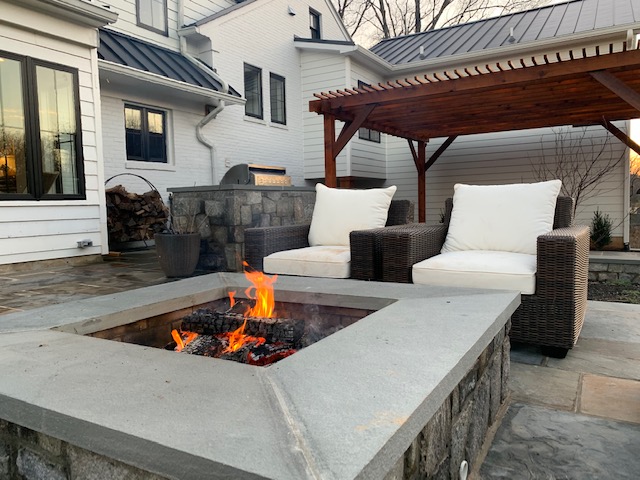
Nothing transforms a backyard into a warm, inviting oasis quite like a fire pit. Whether it’s for cozy family nights, entertaining friends, or simply relaxing under the stars, fire pits are a must-have for outdoor spaces. But when it comes to choosing one, the debate often boils down to natural gas fire pits vs wood fire pits. Each has its perks and challenges, and picking the right one depends on your lifestyle, preferences, and outdoor goals. Let’s explore the ins and outs of both to help you decide.
Natural Gas Fire Pits
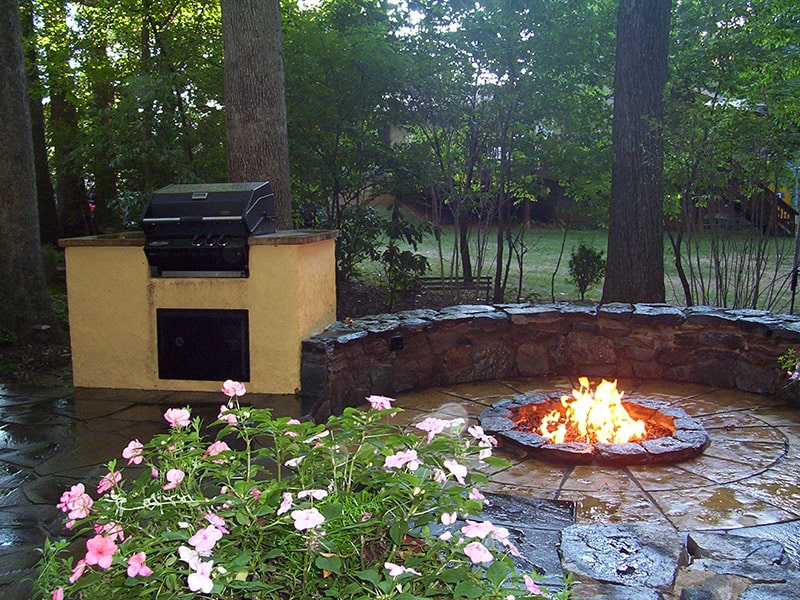
How They Work
Natural gas fire pits are fueled by a direct gas line or a propane tank. With just a flip of a switch or turn of a knob, you’ll have an instant, steady flame—no matches or fire-starting skills required.
The Advantages
- Convenience is King: If you love the idea of instant flames and zero cleanup, natural gas fire pits are hard to beat. There’s no need to gather wood or sweep up ashes afterward.
- Consistent Heat Output: These fire pits deliver a steady, reliable flame that’s perfect for warming up chilly evenings.
- Eco-Friendly Option: Compared to wood-burning pits, natural gas produces fewer emissions, making it a greener choice.
- Modern Aesthetic: Sleek designs and clean lines make natural gas fire pits a favorite for contemporary outdoor spaces.
The Drawbacks
- Higher Upfront Costs: Installation can be pricey, especially if you need a gas line installed.
- Dependency on Fuel: You’ll need access to natural gas or propane, which could limit portability.
- Lacks the Classic Charm: While functional, these pits don’t provide the rustic ambiance of crackling wood and glowing embers.
Wood-Burning Fire Pits
How They Work
Wood-burning fire pits operate the old-fashioned way: by burning logs or kindling. All you need is some firewood, a lighter, and a bit of patience to get things going.
The Advantages
- Classic Ambiance: Nothing beats the sound of crackling logs and the aroma of wood smoke. It’s a sensory experience that’s hard to replicate.
- Affordable to Set Up: These fire pits are often less expensive upfront, and wood is a relatively cheap fuel source.
- Versatile Use: Beyond heat, wood fire pits double as cooking tools for marshmallows, hotdogs, or even grilling.
The Drawbacks
- Maintenance Required: From cleaning up ash to storing dry wood, these fire pits demand more effort.
- Smoke and Sparks: While charming, they can produce smoke that irritates sensitive lungs and sparks that may pose a safety risk.
- Unpredictable Flames: The heat output isn’t as consistent and can require frequent adjustments to keep the fire going.
Natural Gas Fire Pits vs Wood Fire Pits: Key Considerations
1. Environmental Impact
Natural gas fire pits emit fewer pollutants and don’t produce smoke, making them more environmentally friendly. Wood-burning fire pits, on the other hand, release carbon and fine particulates, though sustainably sourced firewood can offset some of the impact.
2. Ease of Use and Maintenance
Natural gas wins here with effortless operation and minimal cleanup. If you prefer simplicity, this is the way to go. Wood fire pits require more hands-on effort, from lighting the fire to cleaning up the ash.
3. Aesthetic Appeal
For a modern, polished look, natural gas is the clear choice. But if you’re after a rustic vibe with all the sensory trimmings, wood fire pits deliver in spades.
4. Cost Comparison
While wood fire pits are budget-friendly to install, natural gas models often pay off over time with lower fuel costs and less maintenance.
5. Local Regulations
Check your local fire codes before deciding. Some areas restrict wood-burning fire pits due to air quality concerns or fire hazards, making natural gas a more practical option.
FAQs
Q1: Are natural gas fire pits safe? Yes, natural gas fire pits are generally safe when installed and used correctly. Always ensure proper ventilation and follow manufacturer’s guidelines.
Q2: Can I cook over a natural gas fire pit? While technically possible, it’s not recommended. Wood-burning fire pits are better suited for cooking due to their high, direct heat.
Q3: What’s the best fire pit for small backyards? Natural gas fire pits are ideal for compact spaces since they don’t produce smoke and can be installed as a built-in feature to save room.
When it comes to natural gas fire pits vs wood fire pits, the choice ultimately boils down to your priorities. Do you value convenience and cleanliness? Natural gas is your go-to. Craving a traditional, campfire-like experience? Wood fire pits are the way to go. Whatever you choose, a fire pit will add warmth and charm to your outdoor space, making it a place you’ll never want to leave. Ready to take the next step? Contact us for professional guidance and installation—we’ll help you bring your backyard vision to life.
Allentuck Landscaping Company is Your Residential Landscape Company
Phone: 301-515-1900
At Allentuck Landscaping Company, our mission is to create beautiful environments for people to enjoy. We see landscaping as a way to improve people’s lives.
The Allentuck Landscaping Company team has been delighting homeowners in Maryland, Washington DC and Northern Virginia for over 28 years with our turnkey approach to landscape design, installation, construction and maintenance. Most companies try to serve many types of customers at the same time; homeowners, shopping centers, office buildings and the list goes on. At Allentuck Landscaping Company, we focus on one customer, you, the homeowner. We have a singular focus on bringing you the best landscape practices, the best customer service, and the best value for your home.
Services Provide – Master Landscape Plans, Complete Maintenance Programs, Plantings, Patios, Walkways, Retaining Walls, Water Features, Outdoor Lighting, Outdoor Kitchens, Trellises & Pergolas, Irrigation Systems, Drainage Solutions, Grading & Sodding. Fire Pits & Fire Places, Spring Clean Ups, Decks, Fences
Areas Served – Chevy Chase, Bethesda, Potomac, Rockville, North Potomac, Darnestown, Gaithersburg, Germantown, Travilah, Damascus, Boyds, Clarksburg, Ijamsville, Urbana, Frederick and Washington DC.
Allentuck Landscaping Co. is a proud member of the National Association of Landscape Professionals and MyLandscapeAcademy.
13711 Travilah Rd, Rockville, MD 20850
(301) 515-1900