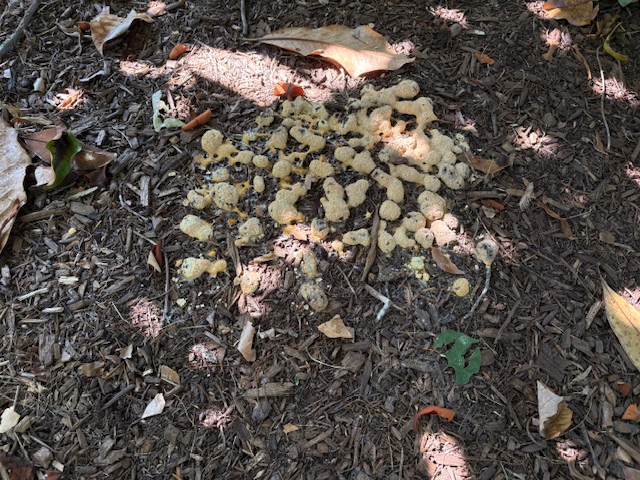
You step outside one morning, coffee in hand, and something catches your eye. Your mulch looks like it’s been attacked by a pile of scrambled eggs. Or maybe it’s foamy. Or crusty. Either way, it’s weird—and definitely not what you expected when you paid for fresh mulch.
What you’re looking at is mulch mold, and while it might look alarming, it’s more of a quirky houseguest than a problem.
What Is Mulch Mold?
First off, let’s clear something up. It’s not actually mold in the way we think of the fuzzy green stuff on bread. Most of the time, what shows up in your mulch is something called slime mold. One of the most common types is nicknamed “dog vomit slime mold”—charming, right? It’s a natural organism that thrives in moist, shady conditions and feeds on decaying organic matter.
Translation: it loves mulch. Especially if it’s fresh and the weather’s humid.
Mulch mold can appear as yellow, orange, brown, or even white blobs. Sometimes it crusts over, other times it looks like someone spilled oatmeal in your flowerbed. It tends to pop up overnight and can spread quickly across bark, leaves, or wood chips.
Is Mulch Mold Dangerous?
Not at all. It looks funky, but it won’t hurt your plants, lawn, pets, or kids. In fact, it’s part of nature’s recycling crew—breaking down organic material and returning nutrients to the soil.
So while it might not be winning any beauty contests, mulch mold isn’t a sign of anything going wrong in your landscape. It just means your mulch is doing its job: decomposing and enriching the soil.
Why Does Mulch Mold Happen?
Here’s what sets the stage for it:
Moisture. Lots of rain or heavy watering creates the damp conditions slime mold loves.
Shade. Mulch that doesn’t get much sun stays wet longer.
Organic materials. Hardwood mulch, shredded bark, and mulch with lots of fines (small particles) are perfect food sources for slime molds.
When all three line up—shade, moisture, and mulch—mulch mold has a party.
What Can I Do About Mulch Mold?
If you’re grossed out or just want it gone, here are your options:
1. Rake it up.
Break up the moldy patches with a rake or even a stick. Exposing it to air and sunlight usually dries it out fast.
2. Let it dry.
Most slime molds are short-lived. They dry up on their own in a day or two once conditions change. No chemicals needed.
3. Adjust watering.
Don’t overwater your beds, especially in shaded areas. Mulch should be damp, not soaked.
4. Replace the mulch (if you must).
If it keeps returning and you’re over it, scoop up the affected areas and toss them. Consider switching to mulch with larger chunks or composted mulch, which molds are less likely to love.
How to Prevent Mulch Mold
You can’t prevent it entirely—nature’s gonna nature—but you can make your beds less inviting to it:
Keep mulch to 2–3 inches deep. Thicker mulch traps more moisture.
Use coarser mulch with fewer fine particles.
Avoid piling mulch against plant stems or tree trunks.
Improve airflow around your beds by spacing plants well.
Water early in the day to let things dry out before nightfall.
Mulch mold may look weird, but it’s not something to stress over. It’s just part of the natural cycle of breaking things down and building soil health. If it shows up in your garden, take it as a sign that your landscape is alive and kicking.
At Allentuck Landscaping Company, our mission is to create beautiful environments for people to enjoy. We see landscaping as a way to improve people’s lives.
The Allentuck Landscaping Company team has been delighting homeowners in Maryland, Washington DC and Northern Virginia for over 28 years with our turnkey approach to landscape design, installation, construction and maintenance. Most companies try to serve many types of customers at the same time; homeowners, shopping centers, office buildings and the list goes on. At Allentuck Landscaping Company, we focus on one customer, you, the homeowner. We have a singular focus on bringing you the best landscape practices, the best customer service, and the best value for your home.
Fall in Maryland is magic. The air turns crisp, the sunlight softens, and the landscape glows in shades of gold, red, and orange. You don’t need to drive out to the mountains to see it. With the right planting strategy, you can bring that same seasonal drama right into your yard. This guide highlights the Best Trees and Shrubs For Fall Color in Maryland, focusing on a handful of plants that thrive in our area and look spectacular when the
Keep The Color Coming With Fall Flowers Just because fall has arrived does not mean the garden cannot have lots of color. In Montgomery County, Maryland area, many fall flowers will bloom well into the approaching winter. Some, like pansies, will even bloom again once spring arrives. Fall flowers in bloom are a spectacular way to add extra color to gardens, flowers pots, even fall flower bouquets in a vase indoors. Consider these fall flowers as a way to brighten
September marks the shift from hot summer days to cooler autumn evenings—a welcome change for both gardeners and their landscapes. While your garden may still be full of late-summer blooms and harvests, it’s also the perfect time to prepare for fall. These Top September Garden Tips will help you enjoy the last of summer’s bounty while getting your landscape ready for the season ahead. 1. Refresh and Revive Your Lawn Lawns often feel the stress of summer heat and foot
Outdoor kitchens have gone way beyond a simple grill on the patio. They’ve become full-on extensions of the home—places to cook, relax, and entertain. If you’re thinking about building one, the first thing on your mind is probably the same question we hear from almost every homeowner: How much does an outdoor kitchen cost in the Rockville, MD area? The short answer: it depends on size, features, and materials. The longer answer: you’ll want to know what actually drives the
The first day of school comes with a special kind of energy—kids carrying brand new backpacks, parents juggling first-day photos, and teachers ready to welcome their students. At Allentuck Landscaping Co., we believe the outside of a school should reflect that same sense of excitement. That’s exactly why, for the seventh year in a row, we launched our Gardens For Grade School Grants program. This year we partnered with Dufief Elementary School and Travilah Elementary School in North Potomac, MD.
If you’re lucky enough to have an outdoor fire feature, you’re doing something right. But caring for your outdoor fire feature isn’t just about looks—it’s about keeping those flames safe, reliable, and downright inviting. Because when the day cools off, it should be the crackle and glow drawing people in, not worry. Why Caring For Your Outdoor Fire Feature Matters Let’s face it: a fire feature is way more than a decorative element—it’s where memories happen. A well-maintained fire feature