
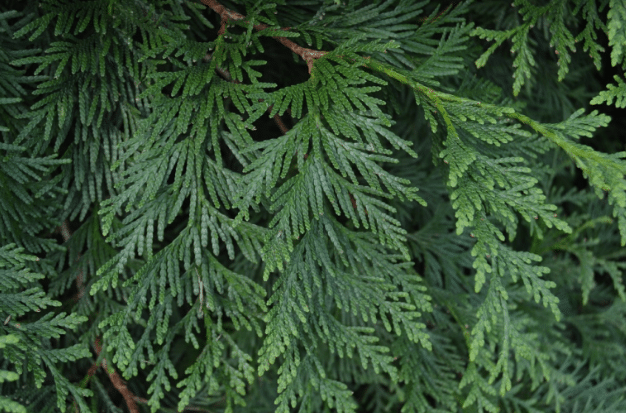
Backyard privacy shouldn’t be complicated. Homeowners just want a fast-growing, good-looking screen that blocks noise, hides neighboring windows, and makes a yard feel like a retreat. The best privacy trees can do all of that, and more. But not every evergreen behaves the same way. Some shoot up like rockets. Others handle cold better. Some stay dense year-round with almost no babysitting. Choosing the right one matters, or you’ll be staring at gaps, browning branches, or a tree that simply can’t handle your climate.
Three of the most popular contenders are Green Giant Arborvitae, Leyland Cypress, and Yoshino Cryptomeria. All are tall, all are fast, and all can transform a yard. The secret is matching the right tree to the right yard.
Quick Comparison: Best Privacy Trees at a Glance
| Tree | Growth Rate | Mature Height | Sun Tolerance | Best Features | Possible Drawbacks |
|---|---|---|---|---|---|
| Green Giant Arborvitae | Fast | 30–50 ft | Full sun to partial shade | Cold tolerant, disease resistant, stays dense | Needs consistent water in hot, dry regions |
| Leyland Cypress | Very fast | 40–60 ft | Full sun | Handles heat, great for big screens | Can be prone to disease, needs space |
| Yoshino Cryptomeria | Fast | 30–45 ft | Full sun | Soft texture, stays narrow, great for humidity | Can bronze in winter cold |
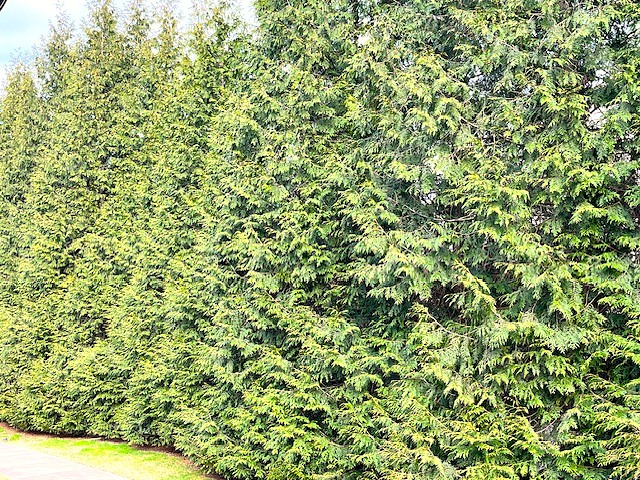 Green Giant Arborvitae: A Favorite Among the Best Privacy Trees
Green Giant Arborvitae is the workhorse of privacy screens. It grows fast and forms a lush, soft-looking wall of green. Homeowners love that it doesn’t need constant trimming to stay tidy. It usually grows 30–50 feet tall but remains narrow enough for suburban yards.
If your yard gets a mix of sun and shade, Arborvitae handles it without a complaint. It also stands up to cold winters, which makes it a great choice for anyone tired of watching evergreens turn brown every January. Once established, it asks for very little besides regular watering during hot, dry spells. For many families, it becomes the most reliable and lowest-maintenance option.
Best for: Smaller yards, colder regions, partial shade, and homeowners who want privacy without constant pruning.
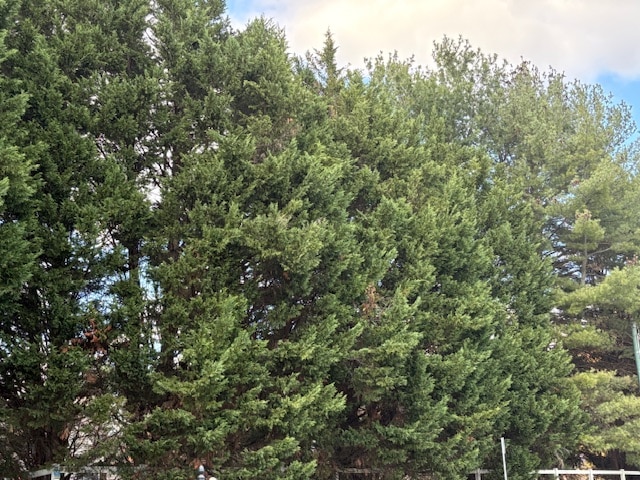
Leyland Cypress: When You Need Height Fast
Leyland Cypress is the speed demon. If you need a massive screen in a hurry, this one delivers. It thrives in full sun, heat, and even salty coastal air, which is why it’s popular in warmer states.
Leyland Cypress’ create excellent privacy, but they need breathing room. Plant them too close, and they’ll crowd each other, compete for water, and are more likely to develop disease. In the right location, though, they form a tall, dense hedge that blocks out almost anything—neighbors, roads, noise, and wind.
Best for: Big properties, sunny yards, and homeowners who want fast results.
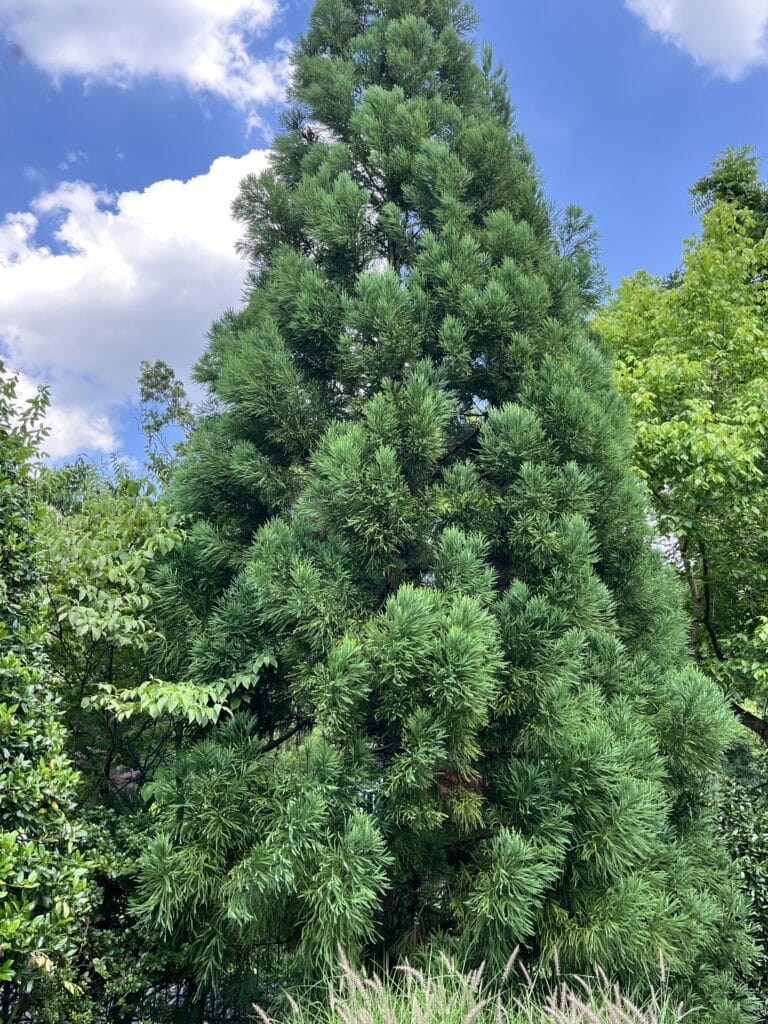 Yoshino Cryptomeria: The Softer, More Elegant Option
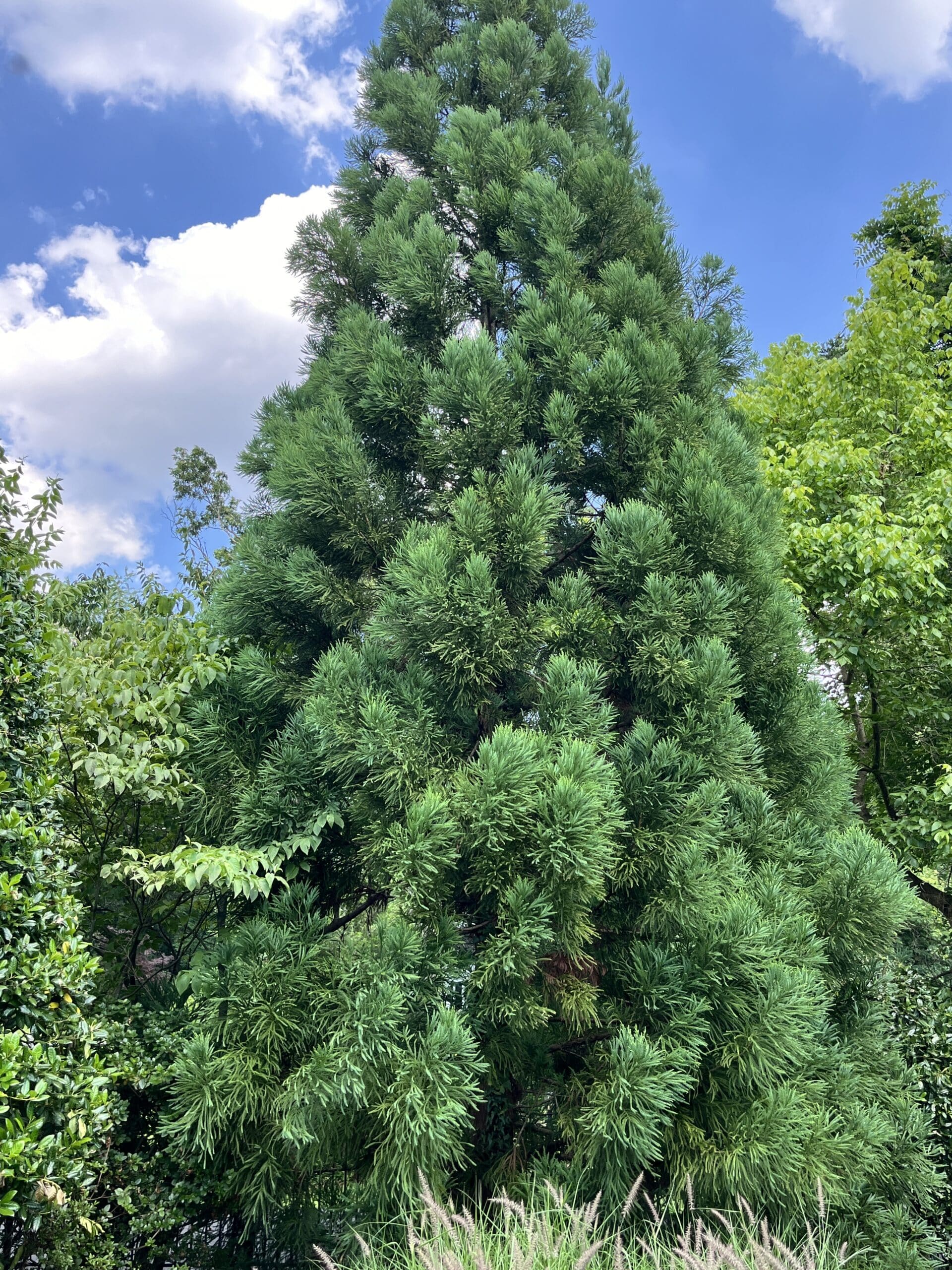
Yoshino Cryptomeria offers privacy without the “hedge” look. Its foliage is feathery and elegant, and it grows tall without spreading too wide. That’s a big win for yards that want height but don’t have space for a tree that balloons outward.
Cryptomeria loves humidity and handles heat well, which makes it one of the best privacy trees for the Mid-Atlantic and Southeast. It’s also pretty tough when it comes to disease. The only thing it doesn’t enjoy is bitter winter wind. In colder climates, it can bronze a little in winter—but it greens right back up once spring arrives.
Best for: Smaller spaces, warm or humid climates, and anyone who wants privacy with a softer, more natural look.
Which One Fits Your Yard?
Here’s a simple way to decide:
-
Small yard or part shade? Green Giant Arborvitae
-
Hot summers and full sun? Leyland Cypress or Cryptomeria
-
Tight space but need height? Cryptomeria
-
Cold winters? Green Giant Arborvitae
-
Want a huge screen fast? Leyland Cypress
Spacing matters. Plant most privacy trees 6–10 feet apart. This keeps them full from top to bottom and prevents crowding. During the first two years, consistent watering is everything. Mulch helps keep roots cool, soil moist, and weeds under control.
The Bottom Line: Choosing the Best Privacy Trees
Homeowners deserve a yard that feels peaceful and private. The best privacy trees aren’t just about height—they’re about the right fit for your space, soil, and climate. Green Giant Arborvitae, Leyland Cypress, and Yoshino Cryptomeria all deliver big, lush results, but each one shines in different conditions.
At Allentuck Landscaping Company, our mission is to create beautiful environments for people to enjoy. We see landscaping as a way to improve people’s lives.
The Allentuck Landscaping Company team has been delighting homeowners in Maryland, Washington DC and Northern Virginia for over 28 years with our turnkey approach to landscape design, installation, construction and maintenance. Most companies try to serve many types of customers at the same time; homeowners, shopping centers, office buildings and the list goes on. At Allentuck Landscaping Company, we focus on one customer, you, the homeowner. We have a singular focus on bringing you the best landscape practices, the best customer service, and the best value for your home.
Services Provide – Master Landscape Plans, Complete Maintenance Programs, Plantings, Patios, Walkways, Retaining Walls, Water Features, Outdoor Lighting, Outdoor Kitchens, Trellises & Pergolas, Irrigation Systems, Drainage Solutions, Grading & Sodding. Fire Pits & Fire Places, Spring Clean Ups, Decks, Fences
Areas Served – Chevy Chase, Bethesda, Potomac, Rockville, North Potomac, Darnestown, Gaithersburg, Germantown, Travilah, Damascus, Boyds, Clarksburg, Ijamsville, Urbana, Frederick and Washington DC.
Allentuck Landscaping Co. is a proud member of the National Association of Landscape Professionals and MyLandscapeAcademy.
13711 Travilah Rd, Rockville, MD 20850
(301) 515-1900