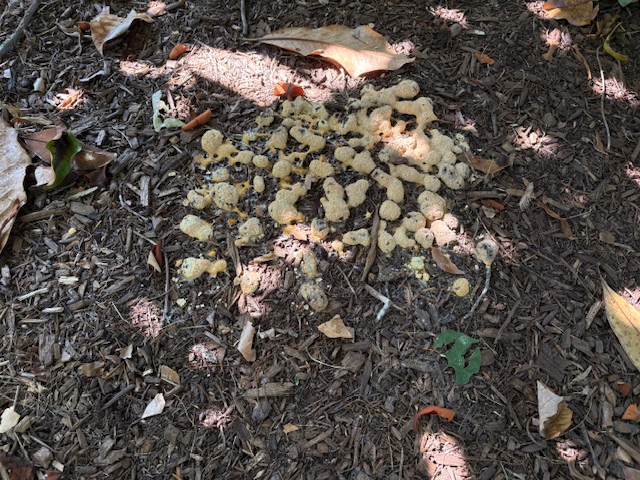
You step outside one morning, coffee in hand, and something catches your eye. Your mulch looks like it’s been attacked by a pile of scrambled eggs. Or maybe it’s foamy. Or crusty. Either way, it’s weird—and definitely not what you expected when you paid for fresh mulch.
What you’re looking at is mulch mold, and while it might look alarming, it’s more of a quirky houseguest than a problem.
What Is Mulch Mold?
First off, let’s clear something up. It’s not actually mold in the way we think of the fuzzy green stuff on bread. Most of the time, what shows up in your mulch is something called slime mold. One of the most common types is nicknamed “dog vomit slime mold”—charming, right? It’s a natural organism that thrives in moist, shady conditions and feeds on decaying organic matter.
Translation: it loves mulch. Especially if it’s fresh and the weather’s humid.
Mulch mold can appear as yellow, orange, brown, or even white blobs. Sometimes it crusts over, other times it looks like someone spilled oatmeal in your flowerbed. It tends to pop up overnight and can spread quickly across bark, leaves, or wood chips.
Is Mulch Mold Dangerous?
Not at all. It looks funky, but it won’t hurt your plants, lawn, pets, or kids. In fact, it’s part of nature’s recycling crew—breaking down organic material and returning nutrients to the soil.
So while it might not be winning any beauty contests, mulch mold isn’t a sign of anything going wrong in your landscape. It just means your mulch is doing its job: decomposing and enriching the soil.
Why Does Mulch Mold Happen?
Here’s what sets the stage for it:
Moisture. Lots of rain or heavy watering creates the damp conditions slime mold loves.
Shade. Mulch that doesn’t get much sun stays wet longer.
Organic materials. Hardwood mulch, shredded bark, and mulch with lots of fines (small particles) are perfect food sources for slime molds.
When all three line up—shade, moisture, and mulch—mulch mold has a party.
What Can I Do About Mulch Mold?
If you’re grossed out or just want it gone, here are your options:
1. Rake it up.
Break up the moldy patches with a rake or even a stick. Exposing it to air and sunlight usually dries it out fast.
2. Let it dry.
Most slime molds are short-lived. They dry up on their own in a day or two once conditions change. No chemicals needed.
3. Adjust watering.
Don’t overwater your beds, especially in shaded areas. Mulch should be damp, not soaked.
4. Replace the mulch (if you must).
If it keeps returning and you’re over it, scoop up the affected areas and toss them. Consider switching to mulch with larger chunks or composted mulch, which molds are less likely to love.
How to Prevent Mulch Mold
You can’t prevent it entirely—nature’s gonna nature—but you can make your beds less inviting to it:
Keep mulch to 2–3 inches deep. Thicker mulch traps more moisture.
Use coarser mulch with fewer fine particles.
Avoid piling mulch against plant stems or tree trunks.
Improve airflow around your beds by spacing plants well.
Water early in the day to let things dry out before nightfall.
Mulch mold may look weird, but it’s not something to stress over. It’s just part of the natural cycle of breaking things down and building soil health. If it shows up in your garden, take it as a sign that your landscape is alive and kicking.
At Allentuck Landscaping Company, our mission is to create beautiful environments for people to enjoy. We see landscaping as a way to improve people’s lives.
The Allentuck Landscaping Company team has been delighting homeowners in Maryland, Washington DC and Northern Virginia for over 28 years with our turnkey approach to landscape design, installation, construction and maintenance. Most companies try to serve many types of customers at the same time; homeowners, shopping centers, office buildings and the list goes on. At Allentuck Landscaping Company, we focus on one customer, you, the homeowner. We have a singular focus on bringing you the best landscape practices, the best customer service, and the best value for your home.
This past Saturday night was one of those moments that makes you stop, look around, and think, “Wow… this is why we do what we do.” At the CaringMatters Silver Lining Gala, Allentuck Landscaping Co. was honored with the Corporate Partnership Award—a recognition that means a lot more than a plaque and a photo on stage. CaringMatters supports families through serious illness, caregiving, and grief. They provide comfort when life is at its hardest. Being connected to that kind of
As November settles in, the garden enters a period of winding down. But there’s still plenty to do to help your plants survive the coming winter and thrive come spring. Here are five essential November gardening tips to keep your landscape healthy, vibrant, and ready for the cold season ahead. 1. Protect Perennials and Tender Plants For many gardeners, the risk of frost is looming, and November is the time to take protective measures: Mulch Perennials: Apply a layer of
There’s nothing quite like stepping onto your own patio for the first time. The smell of fresh stone, the way the space instantly feels like an outdoor living room — it’s where lazy Saturday mornings and long summer nights collide. But before that first step comes a much less glamorous (and far more important) one: planning. A patio isn’t something you wing. It’s something you design to fit your life. This custom patio planning checklist will walk you through the
Every autumn, as the air turns crisp and the morning light softens, we catch ourselves staring at the trees. There’s something magical about the way green leaves shift into brilliant oranges, reds, and golds. In landscaping terms? That gorgeous transition is all about fall leaf color — and yes, there’s real science behind it. The Green Stage: What’s Behind the Summer Leaves During spring and summer, your trees’ leaves are hard at work. They’re tiny factories, using the green pigment
Hiring a landscape company can feel a little like rolling the dice with your yard — and your wallet. One Google search and suddenly you’re staring at a hundred options, all claiming to be “the best,” “trusted,” and “customer-focused.” It’s overwhelming. And homeowners often have no idea what separates a great experience from a stressful, drawn-out mess. So, let’s break this down clearly, honestly, and in plain English. No industry jargon. No sugarcoating. Just the real stuff most companies won’t
Our List Of The Best Places To Buy A Pumpkin In Montgomery County, MD Halloween is just around the corner so it is time to gut a pumpkin and make a Jack O’ Lantern. Whether you give yours a scary face, funny face or create a work of art, you need a place to purchase your pumpkin. The following are the where we consider the very best places to buy a pumpkin in Montgomery County, MD. Potomac Garden Center –