
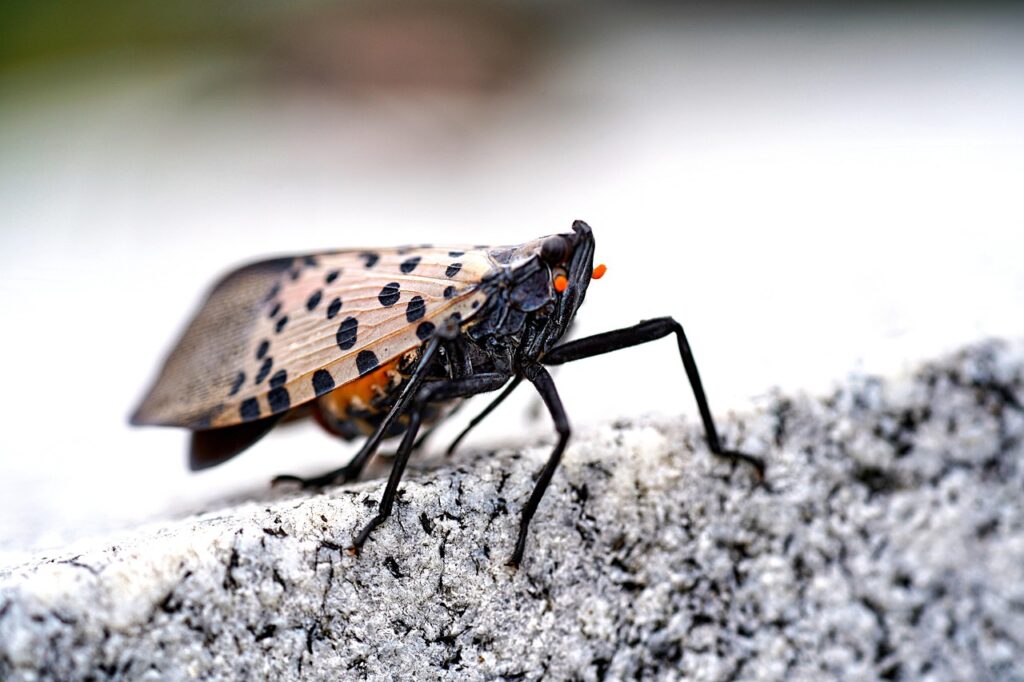
There’s a new bug in town—and it’s not just gross, it’s destructive. If you’ve noticed clusters of sticky, spotted insects on your trees, patio furniture, or garden plants, there’s a good chance you’re dealing with the Spotted Lanternfly in Rockville. This invasive pest has officially made its way to our area, and it’s putting serious stress on local landscapes, shade trees, and even backyard veggie gardens.
The good news? You can do something about it—starting today.
What Exactly Is the Spotted Lanternfly?
Let’s keep it simple. The Spotted Lanternfly is an invasive planthopper native to Asia. It first popped up in Pennsylvania in 2014 and has been marching its way down the East Coast ever since. Now, it’s landed right here in Montgomery County.
It goes through four life stages, but most people start noticing it in late summer when it turns into a full-sized adult: about an inch long, wings with black dots, and bright red underwings when it flies. But the real problem isn’t what it looks like—it’s what it does.
Why the Spotted Lanternfly in Rockville Is Bad News for Your Yard
These pests feed on the sap of over 70 types of plants. In your yard, that means maple trees, oaks, birches, and ornamentals. They particularly love a tree called tree-of-heaven—but they don’t stop there.
When they feed, they excrete a sticky, sugary substance called “honeydew.” Sounds innocent. It’s not. That goo builds up fast, attracts ants and wasps, and leads to black sooty mold that coats leaves, decks, cars—anything nearby. Your once-lush landscape can quickly turn into a sticky, swarming mess.
And while they don’t feed directly on tomatoes or peppers, their mess can still damage your veggie garden by attracting pests and encouraging mold. If you’re growing food in Rockville, this is on your radar now.
What to Watch For—and When
Here’s what to look out for in your yard:
Spring:
-
Egg masses: Dull, grayish smears on trees, fences, grills, firewood, even lawn furniture. They look a bit like dried mud.
-
Tip: Scrape them off with a putty knife into a bag of rubbing alcohol or hand sanitizer.
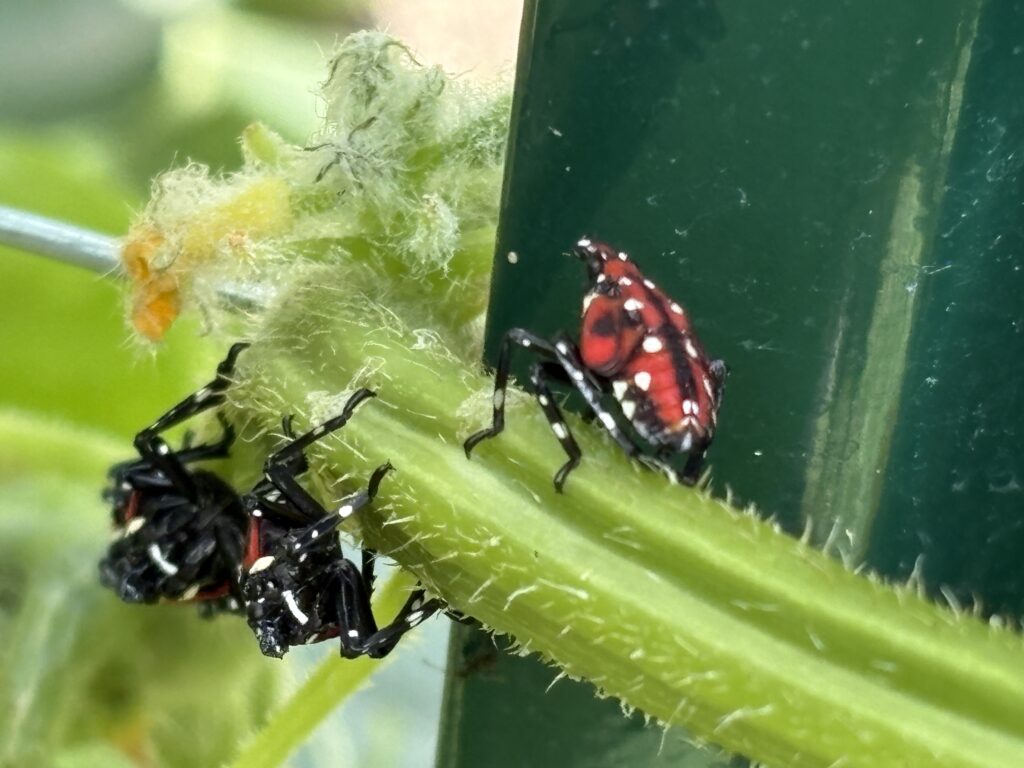 Late Spring to Early Summer:
-
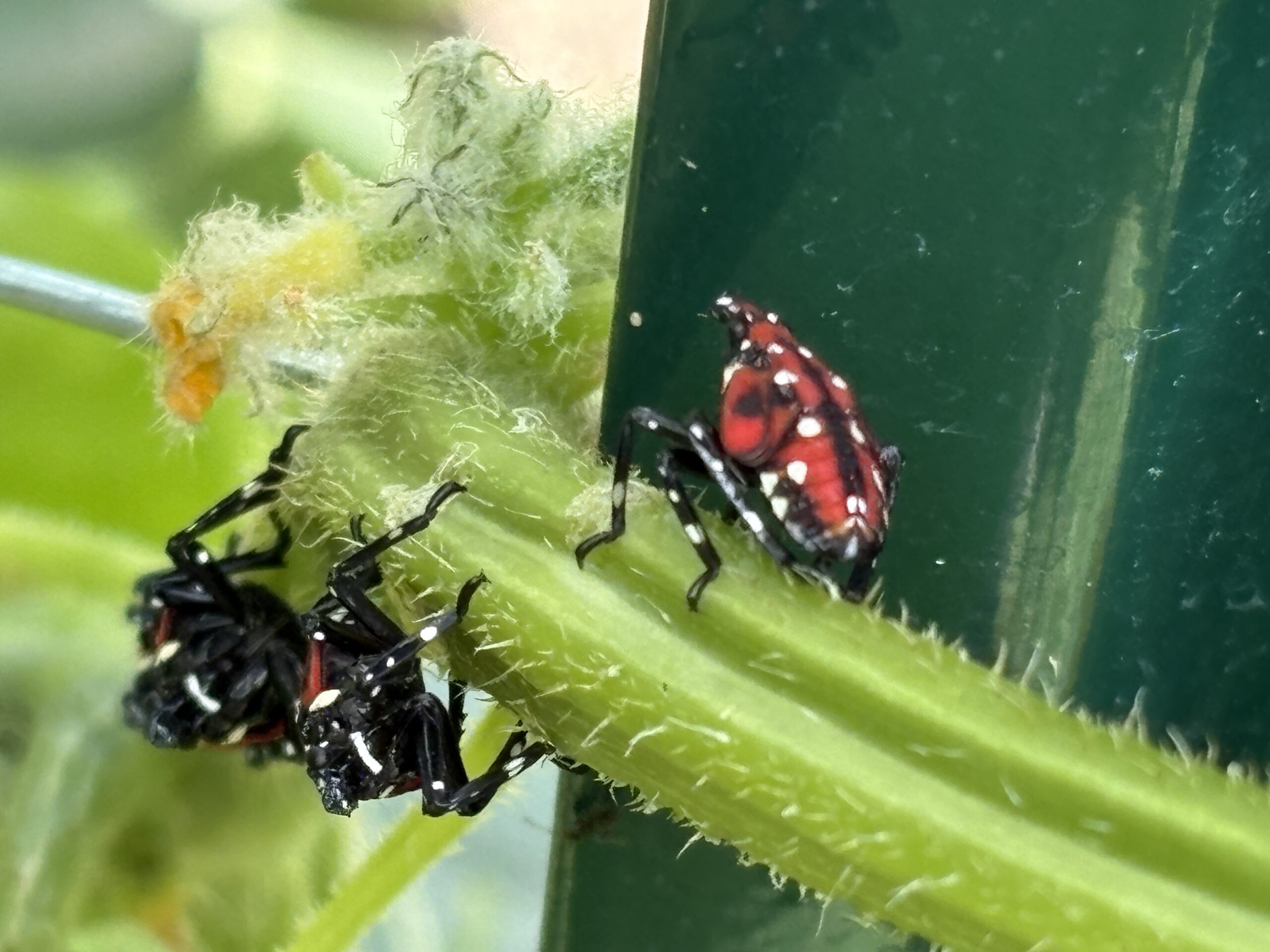
Nymphs: Tiny, black, and jumping—look almost beetle-like with white spots.
-
Tip: Use sticky bands on trees, but protect wildlife by adding a mesh barrier or buying pre-fitted traps.
Mid to Late Summer:
-
Adults: Now they’re big, visible, and in full feeding mode.
-
Tip: Squash them. Seriously. Stomp, swat, smash—whatever it takes. The more you kill, the fewer eggs get laid.
How to Protect Your Trees and Garden From The Spotted Lanternfly in Rockville
This isn’t just an annoying insect. Left unchecked, Spotted Lanternflies can weaken trees and make plants more susceptible to disease. Here’s how to fight back:
1. Remove Egg Masses Now
Walk your property regularly and check for egg masses on trees, stone walls, wood piles, and outdoor furniture. Scrape them off and destroy them. Every mass can contain up to 50 eggs.
2. Use Tree Traps the Right Way
Sticky bands work, but they can trap birds and squirrels if you’re not careful. Always add a wildlife guard or use circle traps instead—these are safer and often more effective.
3. Cut Back Tree-of-Heaven
If you’ve got tree-of-heaven on your property (they grow fast and look like oversized sumac), it’s like putting out a welcome sign for lanternflies. Get it professionally removed or cut it down yourself if you’re able.
4. Keep Your Garden Clean
Don’t let leaves and branches pile up near your garden or fence lines. The cleaner and better maintained your landscape is, the less welcoming it is to pests.
Spotted Lanternfly in Rockville: What You Can Do Now
You don’t need to panic—but you do need to act. If you see the Spotted Lanternfly in Rockville on your property, report it to the Maryland Department of Agriculture. The faster officials can track infestations, the better the chance of controlling the spread.
More importantly, take steps to protect your own space: scrape those eggs, squash the bugs, trim host trees, and keep your landscape in check. This pest is beatable if homeowners take it seriously—and early intervention makes all the difference.
Other Blog Posts of Interest:
When Is The Best Time To Water Plants?
7 Front Walkway Ideas To Make Your Home More Welcoming
At Allentuck Landscaping Company, our mission is to create beautiful environments for people to enjoy. We see landscaping as a way to improve people’s lives.
The Allentuck Landscaping Company team has been delighting homeowners in Maryland, Washington DC and Northern Virginia for over 28 years with our turnkey approach to landscape design, installation, construction and maintenance. Most companies try to serve many types of customers at the same time; homeowners, shopping centers, office buildings and the list goes on. At Allentuck Landscaping Company, we focus on one customer, you, the homeowner. We have a singular focus on bringing you the best landscape practices, the best customer service, and the best value for your home.
Services Provide – Master Landscape Plans, Complete Maintenance Programs, Plantings, Patios, Walkways, Retaining Walls, Water Features, Outdoor Lighting, Outdoor Kitchens, Trellises & Pergolas, Irrigation Systems, Drainage Solutions, Grading & Sodding. Fire Pits & Fire Places, Spring Clean Ups, Decks, Fences
Areas Served – Chevy Chase, Bethesda, Potomac, Rockville, North Potomac, Darnestown, Gaithersburg, Germantown, Travilah, Damascus, Boyds, Clarksburg, Ijamsville, Urbana, Frederick and Washington DC.
Allentuck Landscaping Co. is a proud member of the National Association of Landscape Professionals and MyLandscapeAcademy.
13711 Travilah Rd, Rockville, MD 20850
(301) 515-1900