

Time is a valuable commodity these days. Most homeowners are looking for ways to reduce the amount of time and effort they have to spend maintaining their landscape beds. Fortunately, there are several ways to accomplish this goal.
Choose Low-Maintenance Plants
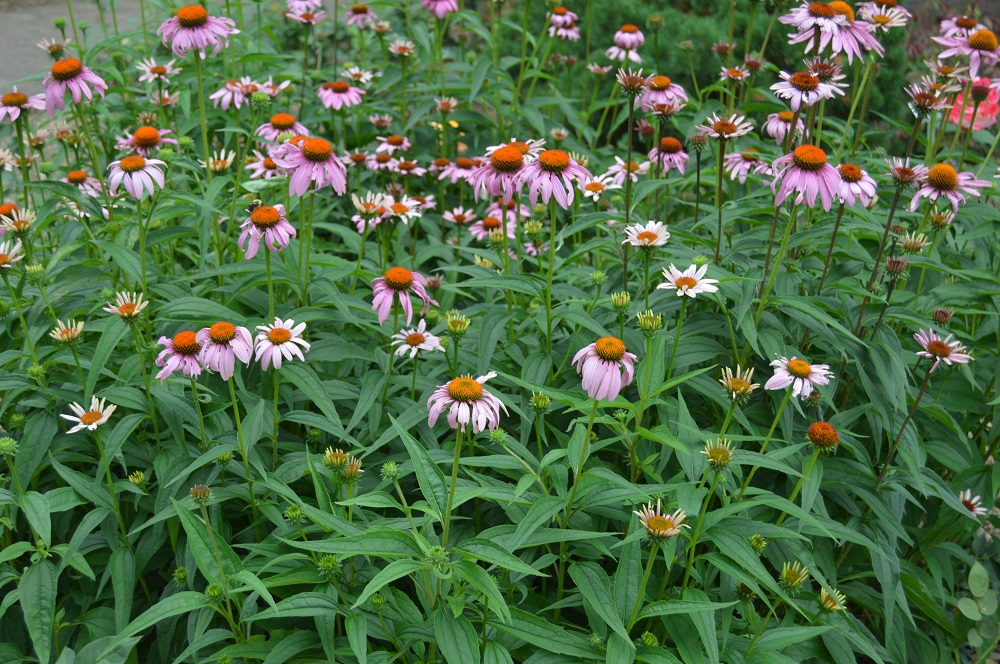
One of the most effective ways to reduce maintenance in your landscape beds is to choose plants that require minimal care. Look for plants that do not require pruning and that do not have any natural pests. Plant knowledge and selection is key to a successful low-maintenance garden.
Install An Irrigation System
Watering your landscape beds can be a time-consuming and labor-intensive task, particularly during the hot summer months. To make this task easier, consider installing an irrigation system. An automatic sprinkler system, for example, can be programmed to water your landscape beds on a regular schedule, ensuring that your plants receive the water they need without requiring you to spend hours with a hose or watering can.
Add Hardscaping Features
Another effective way to reduce maintenance in your landscape beds is to incorporate hardscaping features, such as pathways, retaining walls, or decorative stones. By adding these features, you can create a more structured and orderly appearance to your landscape beds, while also reducing the amount of space that needs to be filled with plants. This can help reduce the need for watering and weeding, while also adding an attractive element to your overall landscape design.
 Use Decorative Gravels
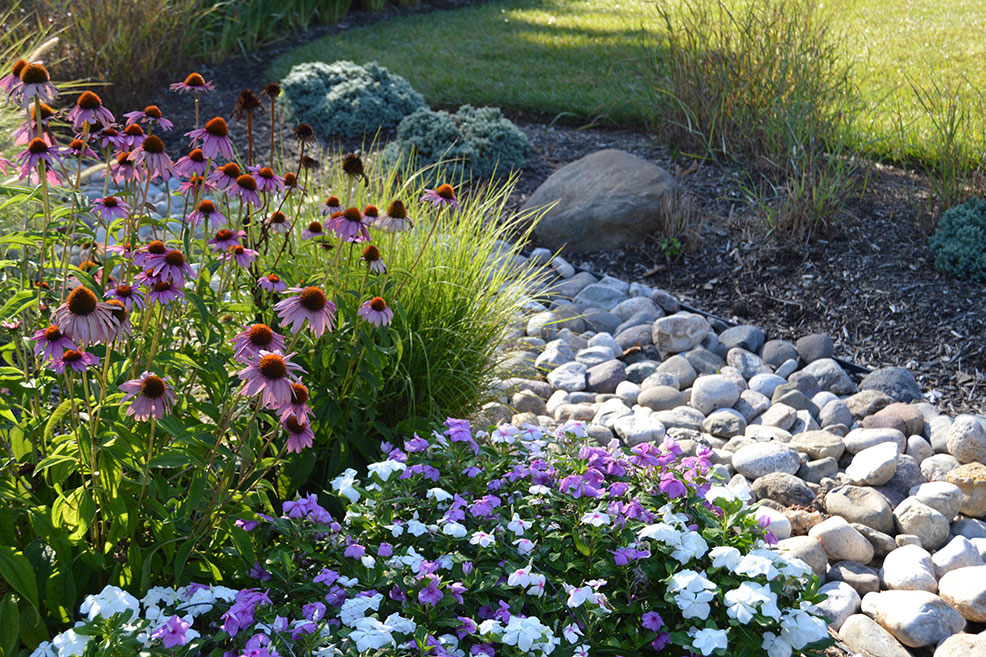
Another strategy for reducing maintenance in your landscape beds is to use gravel instead of traditional organic mulch. While mulch can help suppress weeds and retain moisture, it can also break down over time and require periodic replenishment. Gravel, on the other hand, is a long-lasting and low-maintenance option. It does not decompose like mulch, meaning you will not need to replace it as frequently. Additionally, gravel can help improve drainage, reduce soil erosion, and add an interesting texture to your landscape beds.
Consider Groundcover Plants
Using groundcover plants is another effective way to reduce maintenance in your landscape beds. Groundcovers are low-growing plants that spread quickly to cover a large area. They can help suppress weeds, retain moisture in the soil, and add a lush, green look to your landscape. Some popular groundcovers include creeping phlox, sedum, and creeping thyme, which are all drought-tolerant and require minimal care. By using groundcover plants, you can also reduce the amount of soil exposed to the elements, which can help reduce erosion and soil compaction.
Use Native Plants
Using native plants in your landscape beds is another effective way to reduce maintenance. Native plants are well-adapted to the local climate and soil conditions, meaning they require less water, fertilizer, and other inputs than non-native plants. Additionally, they are often resistant to local pests and diseases, reducing the need for pesticides and other treatments. By incorporating native plants into your landscape beds, you can create a low-maintenance ecosystem that supports local wildlife and helps preserve the natural beauty of your area. Native plants also tend to be more resilient and self-sufficient, requiring less pruning and other care than non-native plants. Before selecting native plants for your landscape, consult with a local landscaping expert or do some research to ensure that the plants you choose are well-suited to your specific climate and soil conditions.
By taking these steps, you can enjoy a beautiful and well-manicured landscape without sacrificing your free time.
Allentuck Landscaping Co. is Your Residential Landscape Company
Phone: 301-515-1900 Email: info@allentucklandscaping.com
At Allentuck Landscaping Company, our mission is to create beautiful environments for people to enjoy. We see landscaping as a way to improve people’s lives.
The Allentuck Landscaping Company team has been a leading landscape company in Montgomery County, Maryland for over 28 years with our turnkey approach to landscape design, installation, construction and maintenance. Most companies try to serve many types of customers at the same time; homeowners, shopping centers, office buildings and the list goes on. At Allentuck Landscaping Co., we focus on one customer, you, the homeowner. We have a singular focus on bringing you the best landscape practices, the best customer service, and the best value for your home.
Services Provide – Master Landscape Plans, Complete Maintenance Programs, Plantings, Patios, Walkways, Retaining Walls, Water Features, Outdoor Lighting, Outdoor Kitchens, Trellises & Pergolas, Irrigation Systems, Drainage Solutions, Grading & Sodding. Fire Pits & Fire Places, Spring Clean Ups, Decks, Fences, Mosquito & Tick Control, Deer Control.
Areas Served – Chevy Chase, Bethesda, Potomac, Rockville, North Potomac, Darnestown, Gaithersburg, Germantown, Damascus, Boyds, Clarksburg, Ijamsville, Urbana, Frederick in Maryland and Washington DC.