
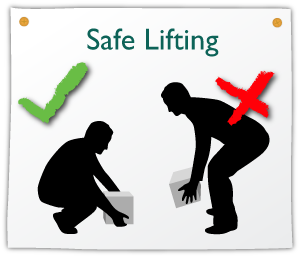
Safe Lifting Techniques
Performing surveys is a common activity in the workplace and often it is not taken into account that there are adequate techniques that must be respected to avoid injury. In fact, injuries to the lower back are the most common injuries that relate to work, according to the Occupational Safety and Health Administration (OSHA).
Basic Concepts on How to Perform Lifting Safely
Performing lifting safely is very important to keep your safety and your back healthy. There are sure lifting techniques that do not cause stresses in the lower back. These include:
- Look over the load. Decide if you can handle the load yourself or if you need help. If in doubt, ask for help. Moving an object that is too heavy or too large can cause serious injury.
- Clear the area of possible obstacles before beginning to transport the object.
- Support and push object when transporting; You must take it firmly. Transporting objects will change their balance. To make this change in balance a minimum, keep the load close to the body and at its normal center of gravity between the legs and shoulders.
- Position your feet well. The feet should be shoulder-width apart, with one foot next to the other and behind the object to be lifted. This will allow you to use all the strength of your leg muscles. The muscles of the legs are stronger and more powerful than those of the back, so let the legs do the work.
- Bend your knees. To bend to the waist to reach the object you have to lift causes tension in the muscles of the back, shoulders and neck.
- When performing the lift, keep your arms and elbows as close to your body as you can. If you have to stretch the arms completely away from the body, ask for help to do the lifting.
- Use your feet to change direction. Do not rotate the body. Rotating the body adds to the tension that causes the lifting and affects the balance.
- To lower the object, bend your knees as you did to lift it. To place the load on a bench or shelf, place it on the edge and slide it into position. Make sure hands and feet are free when lowering the load.
Performing the lifting of an object safely requires training and practice. To lift and carry heavy objects, use equipment, if available. Cargo equipment, forklifts and cranes are designed for this purpose.
Team Raising
When other people are helping you carry out a survey, teamwork is very important. If you are transporting the cargo to another location, both people must coordinate this before lifting the object. Check the route and be clear. A worker must be in a position to observe and direct the other. The work of loading and unloading must be done in unison. Do not drop the load suddenly without warning your partner.
Your safety is important
Appropriate lifting methods protect against injuries and facilitate continuous work. It is important to think about what you will do before lifting the object; Over time, these safe lifting techniques will become a habit. Contact your supervisor if you have questions or concerns regarding safe lifting techniques.
Safe Lifting Techniques
Lifting is a common activity in the workplace, and it is often forgotten that there are proper techniques that need to be followed to avoid injury. In fact, lower back injuries are the most common work-related injury cited by the Occupational Safety and Health Administration (OSHA).
Safe Lifting Basics
Safe lifting plays an important role in keeping your back healthy and you safe. There are safe lifting techniques that take strain off the low back area. They include:
- Look over the load. Decide if you can handle it alone or if you need assistance. When in doubt, ask for help. Moving an object that is too heavy or bulky can cause severe injury.
- Clear any potential obstacles before beginning to carry the object.
- Support and propel the object while carrying it; Your grip should be firm. Carrying objects will change your balance. To keep this change of balance to a minimum, keep the load close to your body and your normal center of gravity, between the legs and shoulders.
- Use good foot positioning. Your feet should be shoulder width apart, with one foot beside and the other foot behind the object that you are going to lift. This allows you to use the full power of your leg muscles. Leg muscles are stronger and more powerful than back muscles, so let your legs do the work.
- Bend your knees. Bending over at the waist to reach the object you want to lift puts strain on your back, shoulder and neck muscles.
- Keep your arms and elbows as close to your body as you can while lifting. If you have to stretch your arms out completely from your body, ask for assistance with the lift.
- Use your feet to change direction. Do not twist your body. Twisting your body adds to the stress of the lift and affects your balance.
- To lower the object, bend your knees as you did to pick it up. To place the load on a bench or shelf, set it on the edge and slide it into position. Make sure your hands and feet are clear when lowering the load.
Safe lifting of heavy objects requires training and practice. And when equipment is available, it should be used to lift and carry heavy objects. Loaders, forklifts and hoists are designed for this purpose.
Team Lifting
When others are helping you lift, teamwork is very important. If you are going to be carrying the load to another location, both of you should coordinate this prior to lifting the object. Check the route and clearance. One worker needs to be in a position to observe and direct the other. Lifting and lowering should be done in unison. Do not let the load drop without warning your partner.
Your Safety is Important
Proper lifting methods protect against injury and makes work much easier. It is important to think about what you are going to do before lifting an object-over time, these safe lifting techniques will become habit. Contact your supervisor if you have any questions or concerns regarding safe lifting techniques.