
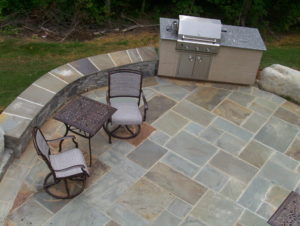
There are a lot of decisions to make when it comes to your outdoor living projects. While all of the options available today are part of what makes a project so exciting, it can also feel overwhelming at times.
The first question most people ask us is “What is the best material for my patio, pavers or natural 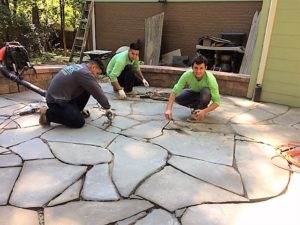 stone?” Both materials have cost and appearance benefits, this is a question that is best answered by the customer after they understand all the facts about each. So, with this blog post, we offer you information so you can make an informed decision for your new patio.
What Are Pavers?
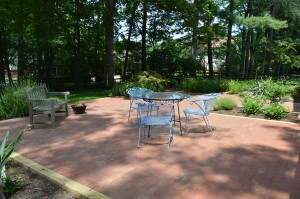
Pavers are concrete blocks manufactured into different shapes, sizes and colors. They have come a long way in recent years and the quality is much higher than it used to be. Most now have color running through the paver so that if one does get chipped it is not noticeable. New shapes and patterns can make for very interesting patios and when combined tastefully, even artistic. Paver companies are also manufacturing materials to look like flagstone and travertine.
 What Is Natural Stone?
Natural stone is created by nature and quarried. The most often used stone for patios is flagstone. Flagstone comes in a few basic colors such as gray (Pennsylvania Flagstone) and tan (Tennessee Flagstone). As for shapes, flagstone is available in regular, different sized squares and rectangles, and irregular, which is more free-form. All of these can be used by themselves or in any number of combinations.
Which Is Preferred?
The easy answer; both. Both pavers and natural stone are excellent and well suited to create a patio or walkway that will improve one’s landscape. It really comes down to personal preference, construction method and budget. In the end, which material is selected should come down to which is more appealing to you.
Related Posts:
Elegant Landscape, Walkway & Patio Project in Chevy Chase, MD
Fire Pit, Landscape and Patio Project in Rockville, MD
Remember, Allentuck Landscaping Co. is always here to help you design, install, construct and maintain you lawn and landscape. Give us a call!
Allentuck Landscaping Co. is Your Residential Landscape Company
Phone: 301-515-1900 Email: info@allentucklandscaping.com
At Allentuck Landscaping Co., our mission is to create beautiful environments for people to enjoy. We see landscaping as a way to improve people’s lives.
The Allentuck Landscaping Co. team has been delighting homeowners in Maryland, Washington DC and Northern Virginia for over 28 years with our turnkey approach to landscape design, installation, construction and maintenance. Most companies try to serve many types of customers at the same time; homeowners, shopping centers, office buildings and the list goes on. At Allentuck Landscaping Co., we focus on one customer, you, the homeowner. We have a singular focus on bringing you the best landscape practices, the best customer service, and the best value for your home.
Services Provide – Master Landscape Plans, Complete Maintenance Programs, Plantings, Patios, Walkways, Retaining Walls, Water Features, Outdoor Lighting, Outdoor Kitchens, Trellises & Pergolas, Irrigation Systems, Drainage Solutions, Grading & Sodding. Fire Pits & Fire Places, Spring Clean Ups, Decks, Fences
Areas Served – Chevy Chase, Bethesda, Potomac, Rockville, North Potomac, Darnestown, Gaithersburg, Germantown, Boyds, Clarksburg, Ijamsville, Urbana, Frederick and Washington DC.